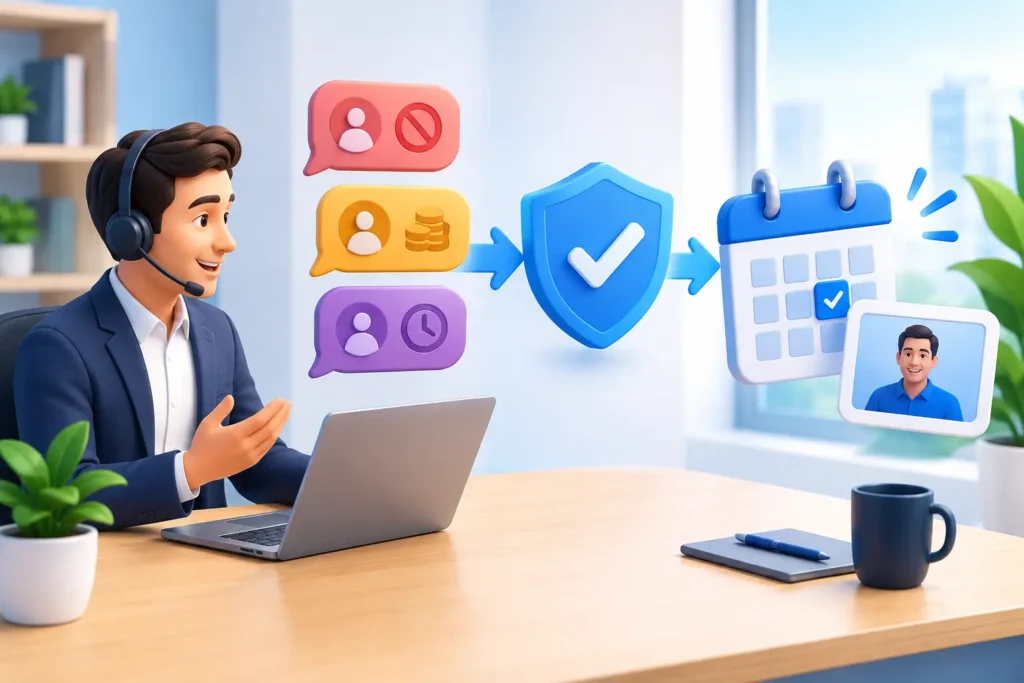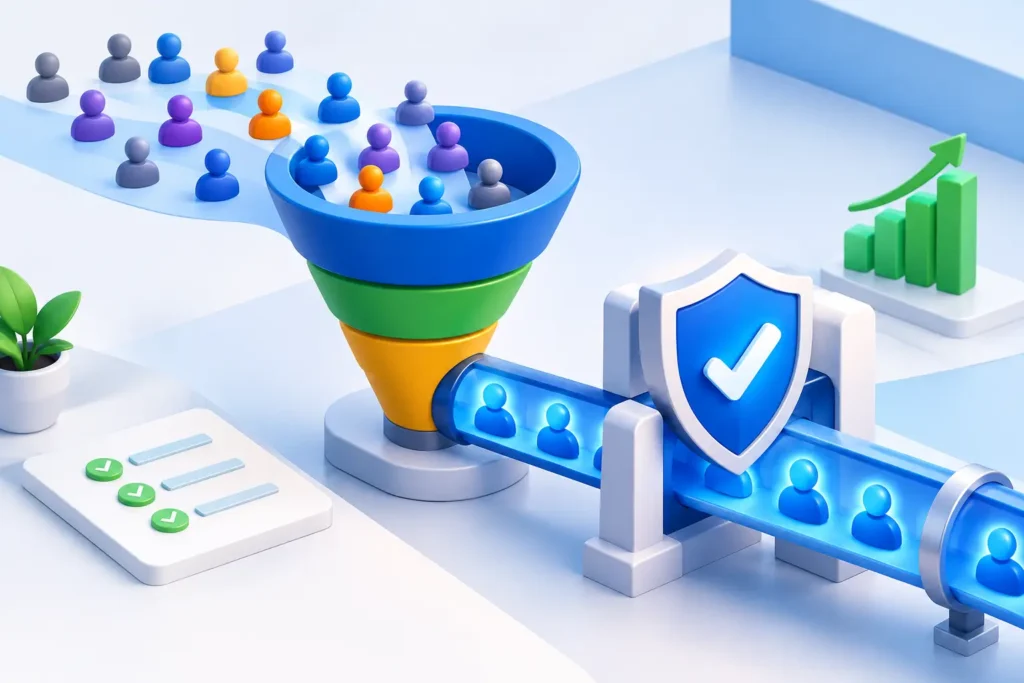

A sales calendar can look busy and still fail to create pipeline. The difference is usually qualification: Are the people booking time part of the right accounts, facing a relevant problem, and able to influence a buying decision? Meeting generation services are built to solve that problem by turning outbound activity into qualified first conversations, not a pile of names for sales to chase.
For lean B2B teams selling complex software, technical services, or high-consideration solutions, that distinction matters. A founder or VP of Sales does not need another dashboard full of opens and clicks. They need a repeatable way to reach the right market, create credible interest, and put meetings on closers’ calendars with enough context to move the opportunity forward.
What Meeting Generation Services Actually Deliver
At their best, meeting generation services operate as an extension of your go-to-market team. They own the work required before a qualified meeting appears: defining target accounts, finding the right contacts, developing messages, managing outreach across channels, handling replies, qualifying interest, and following up until there is a clear next step.
That is different from buying leads. A lead list is raw material. It may contain companies that match a few firmographic filters, but it does not prove that the account is a fit, that the contact is relevant, or that the person wants to speak with your team. The work that converts a list into pipeline happens in the targeting, messaging, persistence, and judgment between the first touch and the booked call.
It is also different from simply outsourcing cold email. Email can be a productive channel, but complex B2B sales rarely depend on one channel or one message. The most effective programs combine email, LinkedIn, cold calling, research, and human follow-up based on how each buyer responds. A prospect who ignores email may answer a thoughtful LinkedIn message. Another may only engage after a well-timed call tied to a specific business trigger.
The objective is not maximum activity. It is a reliable flow of conversations that match your ideal customer profile and deserve your sales team’s attention.
Why Qualified Meetings Are Harder Than They Look
Booking a meeting is easy when the standard is low. Offer a broad demo, target a large audience, and count any calendar acceptance as a win. That approach creates a familiar problem: account executives spend time on calls with students, consultants, companies outside the target market, or contacts with no path to a purchase.
Qualified meetings require more discipline. The outbound team needs clarity on the ideal customer profile, including company size, industry, geography, technology environment, growth stage, buying triggers, and disqualifiers. It also needs a practical view of the buying committee. The person who feels the pain may not control budget. The executive sponsor may not be the daily user. Both can be valuable, but they need different outreach and different qualification.
Messaging has to earn attention without making claims the sales team cannot support. Generic personalization such as mentioning a prospect’s recent post rarely creates a business case. Strong personalization connects a real account-level observation to a plausible commercial problem. For example, a company expanding into enterprise accounts may be dealing with longer procurement cycles, fragmented buyer data, or pressure to build pipeline without adding headcount. The message should demonstrate that the sender understands the situation, not merely that they found a fact online.
Then comes persistence. Many good-fit prospects will not respond to the first contact because timing is imperfect, inboxes are crowded, and priorities move quickly. A disciplined cadence gives the market multiple chances to respond while protecting the brand from excessive or irrelevant outreach.
The Operating Model Behind Effective Meeting Generation Services
A productive program begins with collaboration, not campaign launch. The outbound partner needs to understand the offer, sales motion, proof points, deal economics, common objections, and current pipeline gaps. If the internal team cannot explain who buys, why they buy, and what disqualifies them, no amount of automation will repair the result.
Prospecting Starts With Account Strategy
The strongest programs build a prioritized account universe rather than pulling a broad contact database. This includes identifying the companies most likely to benefit now, mapping relevant stakeholders, and validating the data before outreach begins.
Account selection should be revisited often. A target market can be too narrow, too broad, or based on assumptions that do not hold up in live conversations. Early responses reveal useful intelligence: which titles engage, which industries have urgency, which objections recur, and which account signals correlate with booked meetings. That feedback should shape the next round of prospecting.
Outreach Requires Both Systems and Judgment
Automation helps teams operate at volume. It can organize data, trigger tasks, sequence touches, identify research signals, and keep follow-up from falling through the cracks. But automation should support relevance, not replace it.
Human judgment is especially important when a prospect replies, raises an objection, or signals a timing issue. A templated response can turn interest into silence. A capable BDR can clarify the problem, ask a useful question, route the conversation correctly, or set a future follow-up that respects the prospect’s buying cycle.
This is why the team structure matters. Meeting generation is not one role. It combines go-to-market strategy, sales enablement, campaign operations, prospect research, and BDR execution. When one person is expected to manage every function, quality usually declines as volume rises.
Qualification Protects the Sales Team
Not every interested reply should become a meeting. Qualification should confirm enough fit to justify the closer’s time. The exact criteria depend on the sales motion, but they commonly include the company’s business model, the contact’s role, the problem being discussed, the likely timeline, and whether there is a credible reason to continue the conversation.
Overqualifying can also be a mistake. If every prospect must have confirmed budget, authority, and an active project before a first call, a team may miss early-stage opportunities that could become meaningful pipeline. The right threshold depends on deal size, sales cycle length, and whether the first meeting is exploratory or solution-specific.
The key is agreement. Sales leadership and the outbound team should use the same definition of a qualified meeting, review exceptions quickly, and adjust criteria based on conversion data rather than anecdotes.
What to Measure Beyond Meetings Booked
Meetings booked is a useful operational metric, but it is not the final measure of success. A program that produces 20 weak meetings can create more cost than value. Leaders need visibility into the full path from target account to revenue.
Track account coverage, positive reply rate, meetings held, meeting quality, opportunities created, pipeline generated, and closed-won revenue. Also review no-show rates and the reasons meetings fail to progress. If prospects consistently say the offer is not relevant, the problem may be targeting or positioning. If meetings happen but do not convert to opportunities, qualification or sales handoff may need work.
Reporting should make those decisions easier. A useful weekly review does more than present activity totals. It identifies what was tested, what the market said, what changed, and what the team will do next. This creates accountability without treating outbound as a black box.
When an External Outbound Team Makes Sense
Building an internal BDR organization can be the right long-term decision, particularly for companies with a proven sales motion, stable hiring capacity, and enough demand to support full-time management. But it requires recruiting, onboarding, enablement, technology, list management, coaching, and time to ramp. For a growth-stage company, that can be a costly experiment.
An embedded meeting-generation partner can be a better fit when leadership needs pipeline now, is testing a new segment, lacks BDR management capacity, or wants to enter the US market with experienced execution already in place. The value is not only labor cost. It is the ability to start with an operating system: people, process, tooling, campaign discipline, and reporting.
That said, outsourcing does not remove the need for internal involvement. The client still has to provide market insight, participate in message approval, give feedback on meeting quality, and run strong discovery calls once meetings are booked. The best results come from shared ownership. Oppify’s role, for example, is to open the conversation with a disciplined outbound engine so the client’s sales team can focus on closing the right business.
A calendar full of meetings is not the destination. The goal is a market-facing system that learns, improves, and keeps putting the right buying conversations in front of your team. Start with a clear definition of a worthwhile meeting, then hold every part of the outbound motion accountable to it.