
A full calendar is not proof that outbound is working. If meetings come from poor-fit accounts, lack buying urgency, or disappear after the first call, the campaign is creating activity rather than pipeline. Effective outbound sales campaign management is the operating discipline that connects account selection, messaging, execution, qualification, and follow-up to one commercial outcome: qualified conversations your sales team has a realistic chance of closing.
For growth-stage B2B companies, that discipline matters because outbound rarely fails for one dramatic reason. More often, the ICP is too broad, the list is stale, the message is generic, ownership is unclear, or follow-up stops before a prospect has had time to respond. A campaign needs more than sending capacity. It needs an accountable system.
What Outbound Sales Campaign Management Actually Covers
Campaign management is not simply loading contacts into a sequencing tool and measuring reply rates. It is the ongoing process of deciding who to pursue, why they should care now, which channel should carry the message, and what happens after a prospect engages.
For a company selling a complex product or service, each part affects the next. A weak account list forces generic messaging. Generic messaging produces low-quality responses. Low-quality responses waste executive selling time. When teams judge performance only by email volume or raw meetings booked, those failures can remain hidden for months.
A well-run program treats outbound as part of the go-to-market engine. Marketing, sales leadership, BDRs, enablement, and operations need a shared view of the target market and a clear definition of a qualified opportunity. The campaign manager’s job is to turn that alignment into consistent daily execution.
Start With an ICP Built for Outreach
An ideal customer profile should guide specific prospecting decisions, not sit in a strategy deck. Revenue teams often define their ICP by company size and industry, then discover that thousands of accounts technically qualify. That is not enough direction for a BDR team.
A useful outbound ICP adds the attributes that signal a plausible need and an accessible buying motion. Depending on the offer, that may include a recent funding event, a new executive hire, a technology change, geographic expansion, a hiring pattern, a compliance requirement, or a visible strategic initiative. It should also account for deal economics. A segment may respond well but still be a poor use of outbound resources if contract values are low, implementation is difficult, or the sales cycle is not supportable.
Personas require the same level of precision. A VP of Sales, a COO, and a technical leader may all influence a purchase, but they care about different risks. The message to each should reflect their operating reality, not simply swap a job title into the same template.
Before a campaign launches, define the target account tiers, priority personas, exclusion rules, buying triggers, and qualification criteria. This makes list building measurable and gives the team a standard for saying no to accounts that look attractive but do not fit.
Build Messaging Around a Credible Reason to Talk
Cold outreach does not need to explain every capability. It needs to earn a response from a busy buyer who has no obligation to engage. The strongest messages connect a relevant observation to a business problem the prospect is likely managing, then offer a clear reason to continue the conversation.
Personalization should be specific, but it should not become performance theater. Mentioning a podcast appearance or a generic company announcement rarely creates relevance by itself. Strong personalization uses a real account signal to frame a commercial hypothesis. For example, a company expanding its enterprise sales team may face a pipeline coverage problem. A firm entering a regulated market may need a different approach to compliance, procurement, or implementation.
The trade-off is scale. Deep research on every contact can limit reach, while shallow personalization can damage credibility. The answer is not choosing one extreme. Build reusable message frameworks by segment, then add account-level context where it changes the value proposition. This allows BDRs to be efficient without sounding automated.
Run Multichannel Outreach With Purpose
Email, LinkedIn, and cold calling should not operate as disconnected activities. Each channel has a job. Email introduces a concise commercial point of view. LinkedIn adds familiarity and another place for prospects to assess credibility. Cold calling creates direct access when a message is easier to discuss than read.
The right mix depends on the audience. Senior executives may be more reachable by phone at certain companies, while technical buyers may respond better after reviewing a thoughtful email. Some verticals have strict gatekeeping or low mobile connect rates. Campaign management means reviewing channel performance by segment instead of applying one cadence to every market.
Cadences also need a reasoned follow-up structure. Prospects are busy, and a lack of response is not always rejection. At the same time, repeated messages that add no new perspective train buyers to ignore the sender. Every follow-up should introduce a useful angle: a relevant trigger, a different business consequence, a concise customer outcome, or a direct question that lowers the effort required to respond.
Protect Meeting Quality Before It Reaches Sales
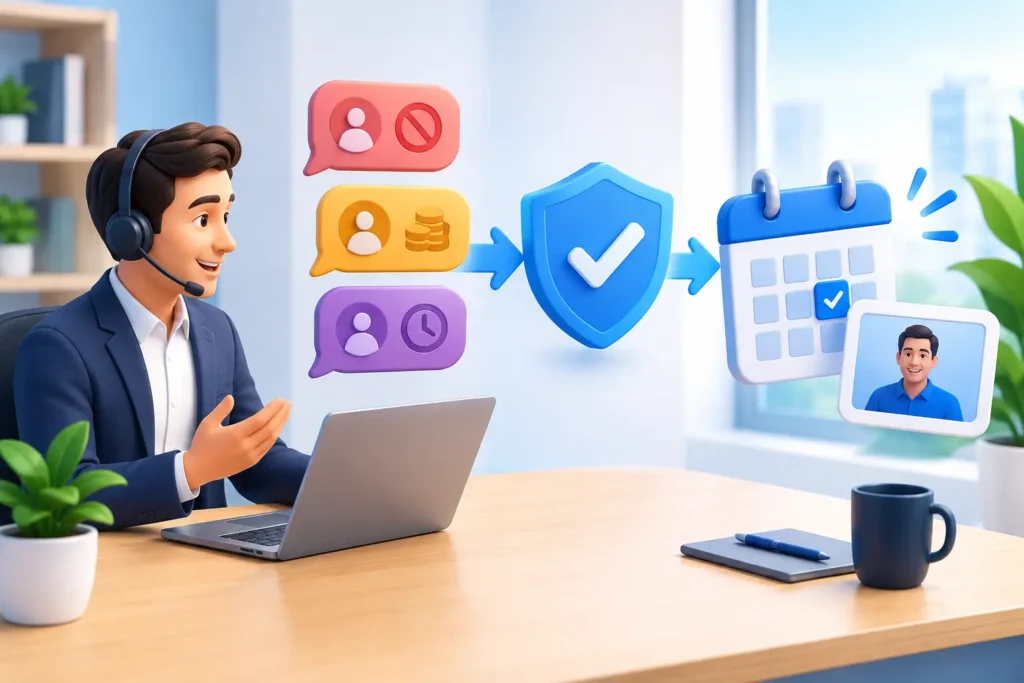
A booked meeting is only valuable if the buyer, problem, timing, and account fit justify a sales conversation. Qualification should not be treated as a script BDRs recite after a prospect agrees to talk. It begins with targeting and continues through every reply, call, and handoff.
Campaign leaders should establish what qualifies a first meeting. That definition may include account fit, persona seniority, a stated pain point, an active initiative, an upcoming evaluation, or access to the broader buying group. Not every requirement must be present. Early-stage companies often need to create demand as well as capture it. But the sales team should know whether a meeting is an active evaluation, a strategic introduction, or an early discovery conversation.
The handoff needs context. A closer should receive the account research, outreach history, contacts engaged, stated challenge, relevant trigger, and any qualification notes. This prevents prospects from repeating themselves and gives the account executive a stronger opening. It also creates a feedback loop: if sales consistently rejects meetings from a segment, the campaign team can identify whether the issue is targeting, qualification, positioning, or the offer itself.
Measure the Funnel, Not Just the Top Line
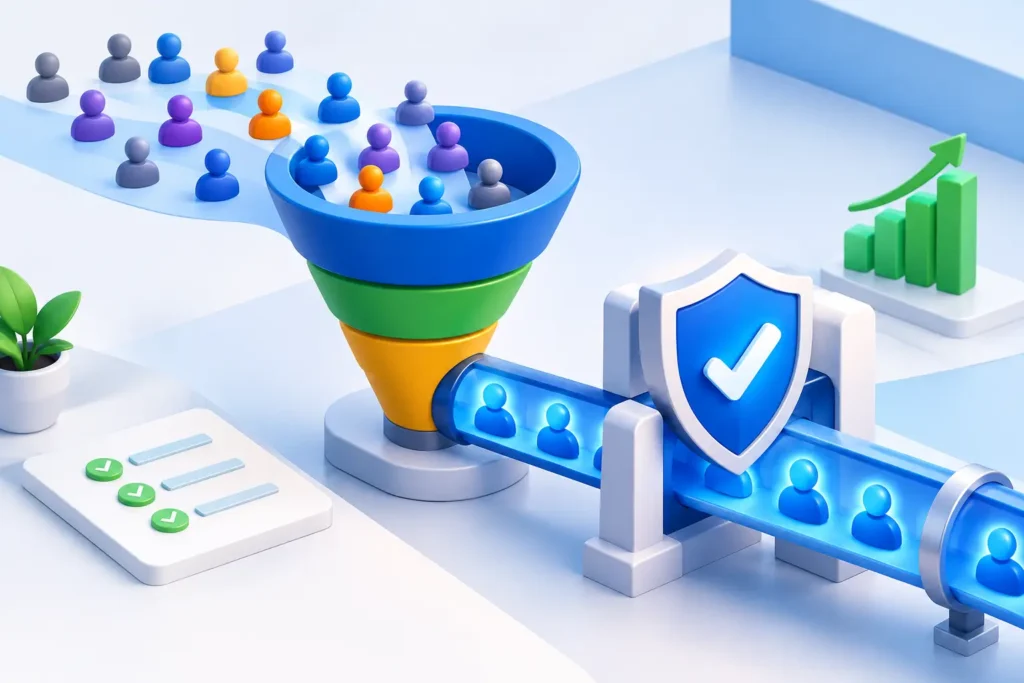
Meeting volume is an easy metric to report and a dangerous one to optimize in isolation. A disciplined scorecard tracks conversion and quality across the full outbound funnel. The exact benchmarks vary by market, but leadership should be able to see:
- Account coverage and the percentage of priority accounts reached
- Positive replies and meaningful conversations by segment and channel
- Meetings booked, held, and accepted by sales
- Sales-qualified opportunities and pipeline created from outbound
- No-show rates, disqualification reasons, and time to next step
These metrics reveal where intervention is required. Low reply rates may indicate weak targeting or poor messaging. Strong replies but weak meeting acceptance may point to loose qualification. Good meetings with no pipeline may signal a sales process issue, a pricing problem, or a mismatch between the campaign promise and the product’s actual fit.
Reporting should lead to decisions, not just status updates. Weekly reviews are most useful when they identify one or two changes to test: a narrower vertical, a different persona, a revised call opening, or a new trigger-based account list. Large changes made all at once make it difficult to learn what actually improved performance.
The Operating Model Determines Consistency
Many companies ask whether they should build outbound internally or work with an embedded partner. The answer depends on budget, speed, management capacity, and the maturity of the go-to-market motion. An internal team can build deep product knowledge and direct market feedback. It also requires hiring, training, tooling, coaching, data operations, and management attention before it produces consistently.
An embedded outbound function can reduce that ramp time by bringing BDR execution, prospecting infrastructure, sales enablement, and campaign operations together from the start. The value is not simply more outreach. It is having clear owners for research, messaging, deliverability, calling, qualification, and reporting.
Oppify approaches this as a managed extension of the revenue team: collaborate on the market strategy, prospect the right accounts, run personalized outreach, create qualified opportunities, report on the funnel, and repeat what works. That model is particularly useful when founders and sales leaders need predictable pipeline but cannot justify building a five-person outbound department immediately.
Keep Improving the Commercial Hypothesis
The best outbound programs do not assume the first campaign is the final answer. They use each response, objection, conversation, and closed-lost result to sharpen the commercial hypothesis. Which accounts recognize the problem fastest? Which role becomes an internal champion? Which trigger creates urgency? Where does the deal stall after the meeting?
That learning should shape the next wave of targeting and messaging. Outbound becomes more efficient when the team stops treating campaigns as temporary blasts and starts treating them as a repeatable revenue system. The practical next step is simple: audit the last 90 days of outreach against meeting quality and pipeline, then fix the first point in the funnel where momentum breaks.