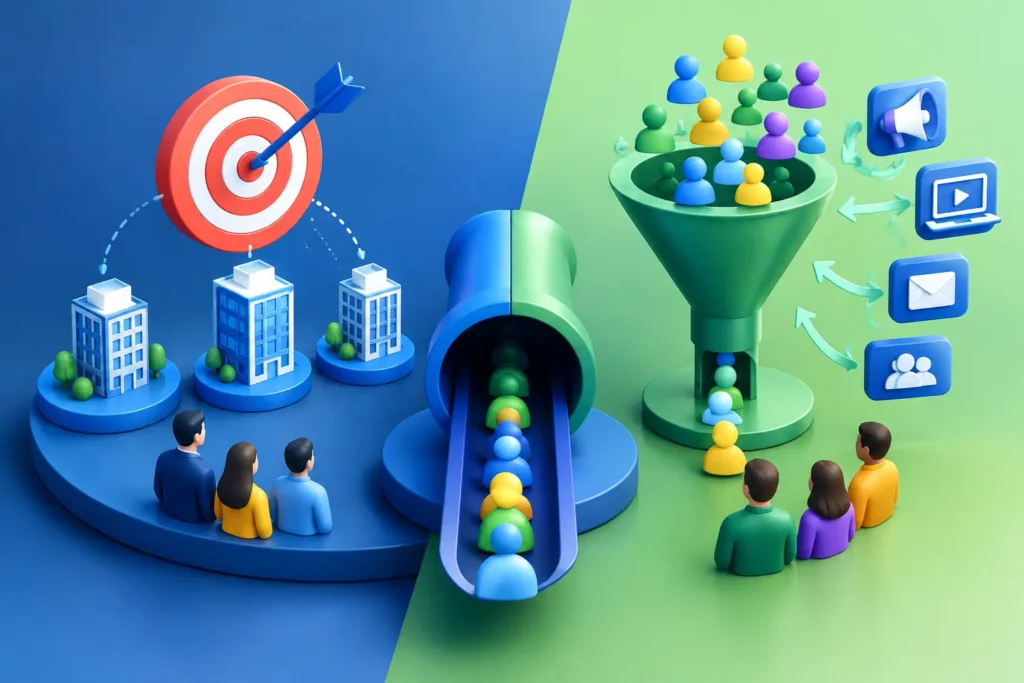

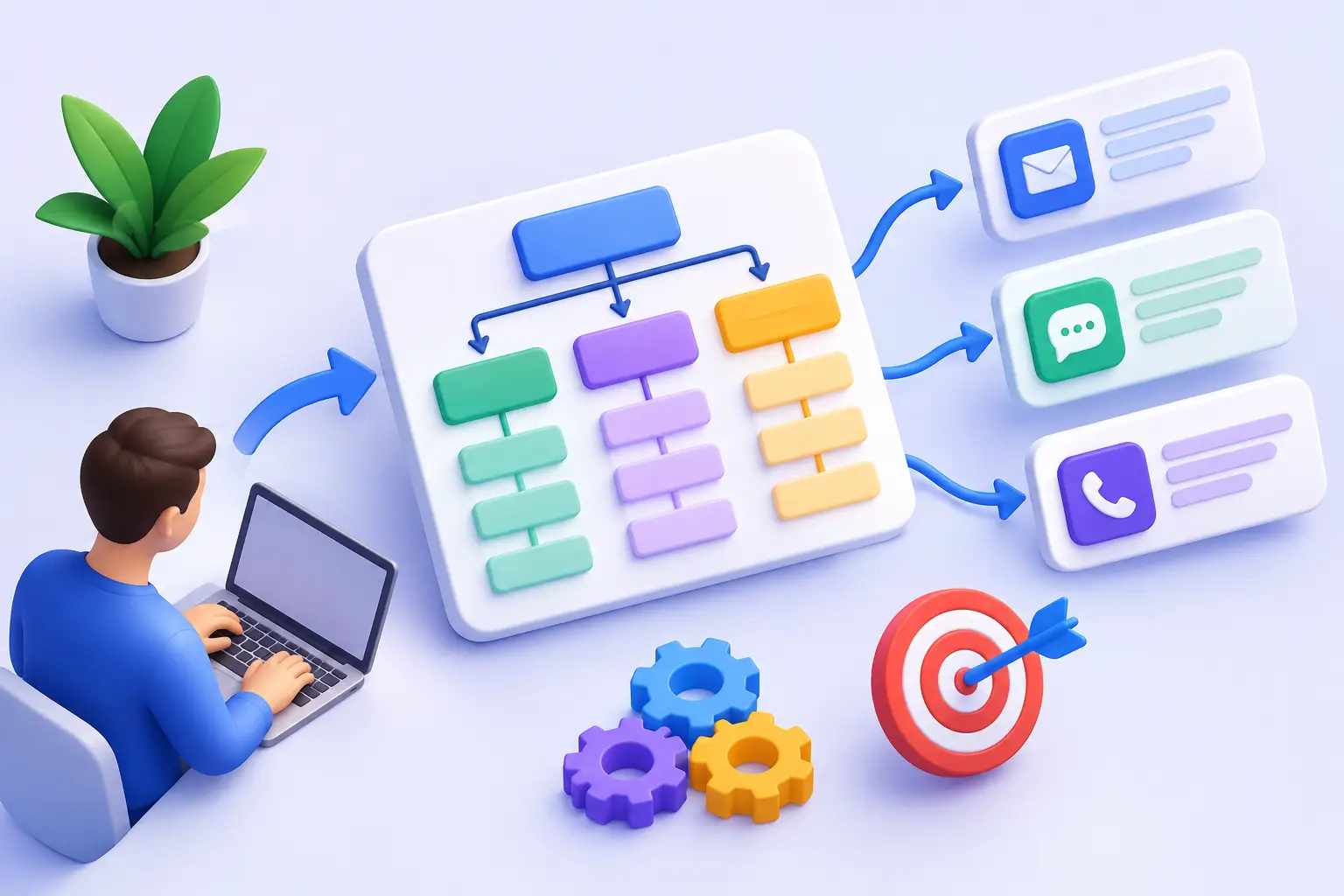
A weak outbound campaign rarely fails because the team sent too few emails. It fails because every message starts from scratch, sounds interchangeable, or asks a prospect to care before giving them a reason. To create outbound messaging frameworks that produce qualified meetings, B2B teams need more than polished copy. They need a repeatable system that connects account selection, buyer priorities, proof, channels, and follow-up.
For lean revenue teams, this matters because inconsistency is expensive. If your BDRs, founder, and account executives describe the same offer three different ways, prospects receive mixed signals and leadership cannot identify what is actually working. A framework gives the team a disciplined starting point without turning every campaign into generic automation.
Why outbound messaging frameworks drive better meetings
Outbound is a positioning test conducted in the market. A prospect will not respond because your company has a broad value proposition or an impressive product category. They respond when the message identifies a relevant business condition, explains the cost of leaving it unresolved, and offers a credible next step.
That is especially true for companies selling complex software, specialized services, or enterprise solutions. The buyer may already have a tool, an internal process, or a competing priority. Your message must earn attention by demonstrating that you understand their environment well enough to have a useful conversation.
A messaging framework creates that discipline. It establishes what stays consistent across a segment – the problem, business outcome, proof, and offer – while defining what must change by account, persona, trigger, and channel. It is not a library of templates. It is the operating logic behind the templates.
Start with a segment, not a product pitch
The first mistake in outbound is attempting to speak to the entire TAM with one campaign. A cybersecurity platform, for example, may technically serve mid-market healthcare, financial services, and SaaS companies. But the triggering events, operational risks, buying committees, and language used in each segment will differ.
Start by selecting one priority segment where you have a realistic right to win. Define it using firmographic and operational criteria: company size, geography, technology environment, growth stage, compliance exposure, hiring pattern, funding event, or sales motion. The goal is not to make the audience as large as possible. The goal is to make it specific enough that a prospect can recognize their own reality in the first few lines.
Build a message around a business condition
Every segment should have a central business condition that creates urgency. That condition may be an upcoming market expansion, a spike in hiring, a new compliance requirement, a fragmented sales process, or an increased cost of acquiring customers.
Avoid leading with features. Instead, document the commercial consequence of the condition. If a company is hiring enterprise reps without a reliable pipeline engine, the issue is not merely “lack of leads.” It is missed ramp targets, expensive underutilized talent, and less confidence in the revenue plan.
A useful framework answers four questions before anyone writes copy:
- What has changed or is likely changing for this segment?
- What does that change cost the buyer if they do nothing?
- What outcome does our offer help create?
- Why should they believe we can help?
Those answers become the strategic spine of the campaign. They also prevent the team from drifting into vague claims such as “drive growth” or “increase efficiency,” which are too broad to create a reply.
Give each buyer a distinct reason to engage
A company does not buy. People with different goals, risks, and authority buy. A CEO may care about efficient growth and speed to market. A VP of Sales may care about rep productivity, forecast coverage, and meeting quality. A revenue operations leader may care about data integrity, workflow adoption, and reporting visibility.
The core problem can remain consistent, but the entry point should shift. This is where many teams over-personalize surface details while under-personalizing the actual message. Mentioning a recent funding round is not meaningful if the email still delivers the same generic pitch to every title.
For each persona, define the following in plain language: their priority, the friction standing in its way, the measurable impact of that friction, and the conversation you want to start. Keep the framework commercially grounded. A senior executive does not need a product tour in a cold email. They need a compelling reason to believe the status quo may be slowing a priority they own.
Use proof that matches the claim
Messaging loses credibility when the proof is disconnected from the promise. If you claim to help companies enter new markets, show evidence related to market entry, pipeline creation, or buyer access. If your claim is reducing the cost and ramp time of building an internal BDR team, demonstrate the operational model behind that result.
Proof can include relevant customer outcomes, recognizable operating experience, a specific process, a market observation, or a credible point of view. The right proof depends on your sales stage. Early-stage companies may not have many logos, but they can still lead with founder expertise, a specialized methodology, or insight gained from a narrow market focus.
The rule is simple: make claims at the level you can support. A precise claim earns more trust than an oversized promise.
Turn the framework into a multichannel sequence
A framework should make channel execution more coherent, not force every channel to repeat the same message. Email, LinkedIn, and cold calling each do different jobs.
Email creates a concise case for relevance. It should be easy to scan, focused on one hypothesis, and built around a low-friction ask. LinkedIn can reinforce familiarity through profile views, connection requests, thoughtful comments, and short direct messages. Cold calling tests whether the hypothesis holds in real time and surfaces objections that improve the rest of the sequence.
Map a campaign so each touch advances the conversation. The first email might introduce the business condition and a relevant outcome. A follow-up can add proof or challenge an assumption. A call can ask a direct diagnostic question. A later message can acknowledge timing and offer a specific resource, benchmark, or short discussion.
Do not confuse persistence with repetition. Sending five versions of the same pitch trains prospects to ignore you. Each touch should introduce a new angle while remaining faithful to the central message.
Create a practical messaging architecture
A usable framework should fit on a working document that campaign operators can reference daily. It needs enough detail to maintain quality, but not so much that it becomes a strategy deck nobody uses.
For every segment and persona, document the target account criteria, trigger signals, primary pain hypothesis, desired outcome, proof points, likely objections, call opener, email angles, LinkedIn approach, and call to action. Include examples of acceptable personalization inputs, such as a strategic initiative, hiring pattern, technology change, executive commentary, or customer-facing signal.
Then define the guardrails. Specify prohibited claims, approved metrics, required qualification questions, and conditions that should remove an account from outreach. These details protect brand credibility and improve the quality of meetings passed to the sales team.
At Oppify, this is where go-to-market engineering and experienced BDR execution need to work together. Technology can identify accounts, prioritize signals, and manage workflow. Human judgment determines whether the account is genuinely relevant, whether the personalization is credible, and whether a reply represents a real opportunity.
Test the message without chasing noise
Outbound testing should answer strategic questions, not generate activity for its own sake. Test one meaningful variable at a time: a pain hypothesis, value proposition, proof point, persona, or call to action. If every element changes at once, the result will not tell you what caused the improvement.
Track performance beyond open rates. Opens are affected by deliverability and subject lines, but they do not confirm message-market fit. Focus on positive reply rate, conversations started, qualified meeting rate, show rate, sales acceptance, and pipeline progression. A campaign that produces more meetings but fewer accepted opportunities is not necessarily winning.
Use call recordings and reply analysis as qualitative data. Repeated objections can reveal a targeting problem, a positioning gap, or a weak offer. Repeated questions can signal that your message has found a real point of interest but needs more clarity. Report these findings weekly so messaging changes are connected to evidence rather than opinion.
The strongest outbound messaging frameworks are never finished. They become sharper as the market responds, buyers object, and the sales team learns which conversations turn into revenue. Build yours to make that learning visible, then give your team the discipline to act on it.