

A full calendar can still hide a pipeline problem. If meetings come from broad lists, weak qualification, or one-off founder outreach, the motion will break as soon as volume rises. This SaaS pipeline growth example shows what a repeatable outbound engine looks like when the goal is not activity for activity’s sake, but qualified conversations with accounts that can realistically buy.
The scenario is a growth-stage B2B SaaS company selling workflow software to mid-market operations teams. It has product-market fit within one customer segment, a capable account executive team, and a clear revenue target. What it lacks is a dependable way to create new opportunities outside referrals, paid demand capture, and the founder’s network.
The Starting Point: Pipeline Was Present but Unpredictable
The company had a $28,000 average annual contract value and a sales cycle of roughly 75 days. Its best customers were companies with 200 to 1,500 employees, distributed operations teams, and an existing stack that exposed the operational problem the software solved.
Marketing was generating some inbound demos, but volume varied significantly month to month. Sales reps were also prospecting, although their outreach happened between discovery calls, proposals, renewals, and internal meetings. The result was familiar: prospecting was urgent only when the pipeline was thin.
Leadership did not need a larger database. It needed a pipeline creation system with three clear outcomes: create relevant first meetings, qualify for real buying potential, and give the sales team enough context to run a productive discovery call.
That distinction changes the work. A generic lead-generation vendor might supply names and form fills. A functioning outbound program has to decide which accounts deserve attention, why each person should engage now, and what happens after the first reply.
SaaS Pipeline Growth Example: Building the Motion
The team began by narrowing the ideal customer profile instead of trying to reach every business that could theoretically use the product. The priority segment included multi-location service businesses and logistics-adjacent companies where operational leaders were managing manual handoffs across teams.
This created a usable account universe of approximately 1,800 companies. That was enough to support sustained outreach, but focused enough to research properly. The team then split those accounts into three tiers based on fit, estimated deal size, trigger events, and the presence of likely champions.
Tier-one accounts received the deepest personalization. These were companies with signals such as a recent expansion, new operations leadership, active hiring for process-heavy roles, or technology changes that suggested a relevant pain point. Tier-two accounts received persona-level personalization tied to their industry and operating model. Tier-three accounts were used carefully for message testing, not as an excuse to send generic volume.
Position the Offer Around a Commercial Problem
The company’s original messaging described product features: automation, dashboards, integrations, and implementation support. None of those claims were wrong. They were simply not a strong reason for a VP of Operations to respond to a cold message.
The outbound message was reframed around an expensive business problem: delayed handoffs were creating missed service-level commitments, inconsistent reporting, and too much management time spent chasing updates. The software became the mechanism for solving that issue, not the headline.
Each campaign used a specific point of view. For example, one sequence targeted operations leaders after regional expansion and asked whether their existing workflow was still reliable as volume increased. Another targeted technology leaders where fragmented systems were slowing process changes. The call to action was a short working conversation, not an immediate product demonstration.
That choice matters in complex B2B sales. Senior buyers are more likely to accept a relevant conversation than a meeting framed as a generic demo. The account executive can introduce the product once the prospect has confirmed the problem is worth discussing.
Run Multichannel Outreach With a Defined Job for Each Channel
Email opened the conversation with a concise, account-specific observation. LinkedIn gave the BDR another way to establish familiarity, engage with relevant company updates, and follow up without repeating the exact email. Cold calls were used to validate priorities, reach prospects who do not live in their inboxes, and accelerate conversations when timing was right.
The campaign did not treat every channel as interchangeable. A call was not a script read aloud from an email. LinkedIn was not a place to send a long pitch in a connection request. Every touch added context, addressed a likely objection, or made the next step easier.
The BDR also worked a defined follow-up process. Positive replies received quick, tailored responses. Soft no’s were categorized by reason: bad timing, wrong owner, existing solution, no current priority, or unclear fit. That data informed both future messaging and account routing.
What the Funnel Looked Like Over 90 Days
The numbers below are illustrative, but the operating math is realistic for a focused outbound program. Over 90 days, the team worked 900 prioritized accounts and engaged multiple stakeholders where appropriate.
From those accounts, 168 people replied or meaningfully engaged. Not all engagement was positive, and it should not be counted as a win. After qualification, 54 first meetings were booked. Of those, 38 met the company’s agreed definition of a sales-qualified opportunity: the account fit the ICP, the contact had influence or access to the buying group, a relevant problem existed, and there was a plausible path to action.
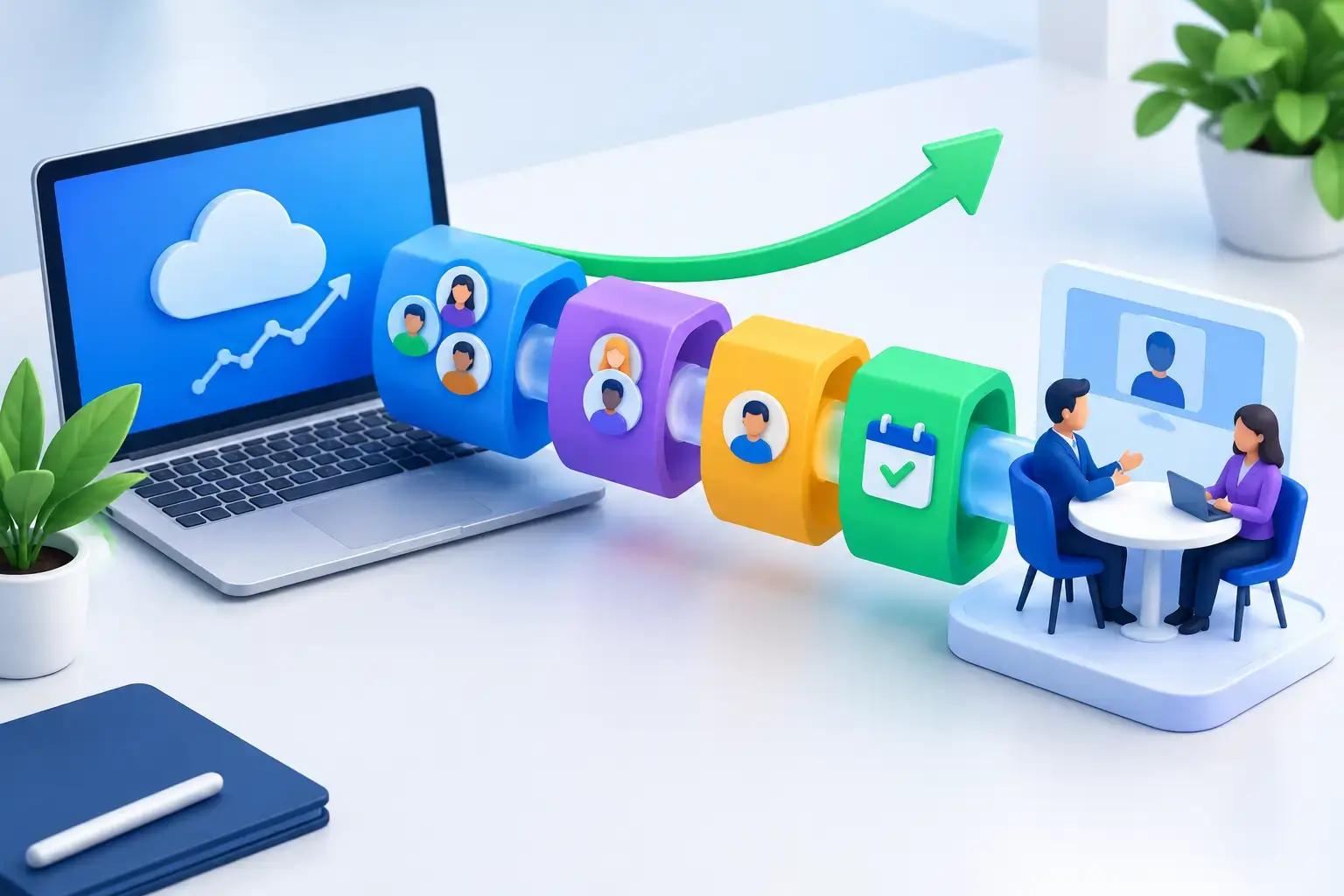
The sales team converted 14 of those opportunities into active evaluations. At the company’s average contract value, even a modest close rate on those evaluations justified the outbound investment. More importantly, leadership could inspect the full chain: accounts selected, contacts reached, messages used, responses received, meetings held, opportunities created, and revenue influenced.
This visibility is what turns outbound from a vague top-of-funnel tactic into a managed revenue function. If meetings are being booked but rarely converting, the issue may be targeting or qualification. If engagement is low, the problem may be the message, the list, deliverability, or the relevance of the trigger. If opportunities advance but fail at procurement, the team may need a different buyer profile or stronger early-stage discovery.
The Trade-Offs That Determine Whether It Works
A program like this asks for discipline. Narrowing the ICP can feel risky because it reduces the size of the immediate list. In practice, a tighter audience often produces better conversations, cleaner feedback, and a more credible market position. The right level of focus depends on total addressable market, deal size, sales cycle, and how much evidence exists around the winning customer profile.
Personalization has a trade-off as well. Deep research on every prospect is unnecessary and expensive. Generic templates, however, are easy to ignore. The practical answer is tiered effort: invest deeply in the highest-value accounts, use meaningful persona and industry relevance for the next tier, and measure whether additional research improves meeting quality.
Speed matters, but only when the process can protect quality. A BDR should not book any meeting that accepts a calendar invite. Qualification standards need to be agreed with sales before outreach begins. Otherwise, one team will optimize for meetings while the other absorbs the cost of poor-fit conversations.
Operating the Program After the First Campaign
The first 90 days are not the finish line. They are a learning period that should produce sharper targeting, stronger language, and a more accurate understanding of the buying committee.
Weekly reporting should connect operational metrics with sales outcomes. It should show which segments are responding, which titles are turning into opportunities, what objections are recurring, how quickly replies are handled, and whether booked meetings are being accepted and attended. A dashboard full of open rates will not answer the questions a CRO or founder needs answered.
The next campaign cycle might expand into a second vertical, introduce a new trigger, or add a complementary persona. It might also remove a segment that generated meetings but no credible opportunities. Pipeline growth is not achieved by protecting an initial hypothesis. It comes from testing it, measuring it, and reallocating effort toward the accounts most likely to become customers.
For lean teams, this is where an embedded outbound function can change the economics. Instead of asking account executives to become part-time researchers, copywriters, callers, and campaign operators, the company can give each role a defined job. At Oppify, that means GTM strategy, prospecting infrastructure, US-based BDR execution, and follow-up working together around the same revenue target.
The practical lesson from this SaaS pipeline growth example is simple: predictable pipeline is built before the meeting is booked. It starts with a clear market decision, earns attention with relevant outreach, and protects sales capacity through qualification. Give that system consistent ownership, and your sales team can spend more of its time where it creates the most value: advancing real opportunities.