
A VP of Sales can open a dashboard and see thousands of contacts reached, healthy email delivery, and plenty of activity. Then they see the number that matters: almost no qualified meetings. The question is not whether the team worked hard. It is why do buyers ignore outreach when the offering may genuinely solve a business problem?
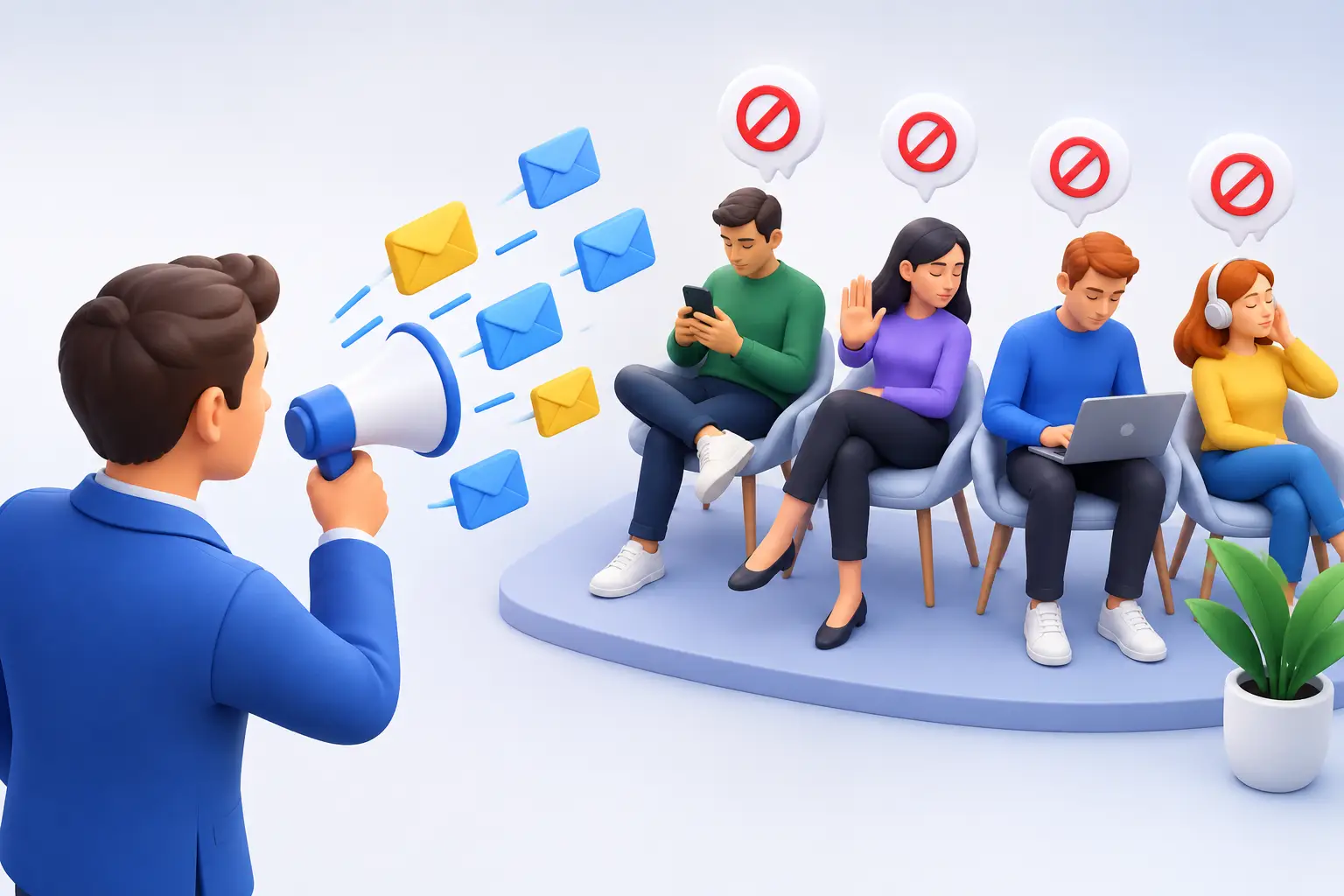
The hard truth is that buyers are not ignoring outreach because outbound no longer works. They ignore it because most outbound asks them to do too much mental work before giving them a reason to care. In a crowded B2B market, relevance is not a nice-to-have. It is the price of admission.
For companies selling complex software, specialized services, or enterprise solutions, fixing this requires more than better copy. It requires disciplined targeting, a credible point of view, channel coordination, and a follow-up process that creates useful conversations rather than more noise.
Buyers Ignore Outreach When It Creates Friction
A buyer does not experience your campaign as a sequence in a funnel. They experience one email between internal meetings, one LinkedIn message while reviewing a budget, or one call during a week when a critical project is behind schedule. They make a fast judgment: Is this relevant, credible, and worth responding to now?
If the answer is unclear, silence is the rational response. Buyers are not obligated to explain why they passed. That means your team has to diagnose the reasons through campaign data, call feedback, reply patterns, and conversion rates at every stage.
Low response rates can signal a messaging problem, but they can also signal weak account selection, a mismatched persona, bad timing, or an offer that is too broad. Treating every issue as a copywriting issue is how teams keep rewriting emails while pipeline stays flat.
1. You Targeted a Job Title, Not a Buying Situation
A title is not an ICP. Two VPs of Operations may share the same responsibilities on paper while facing completely different pressures. One may be managing rapid expansion and actively evaluating new systems. The other may be locked into an annual planning cycle, short on budget, and focused on a major internal implementation.
When outreach is built around titles alone, it tends to sound interchangeable. Buyers recognize that immediately.
Start with accounts that have a reason to change. That might include a new funding event, a leadership hire, market expansion, a shift in product strategy, hiring patterns, a technology change, or a stated operational priority. These signals do not guarantee a meeting, but they give your outreach a business context. Context earns attention.
2. The Message Describes Your Company Before Their Problem
Many outbound messages lead with credentials: what the company does, how long it has operated, what platform it built, or how many clients it serves. Those facts may matter later. They rarely earn a reply first.
A buyer wants to know whether you understand a problem that is expensive, frustrating, or difficult to solve. Lead with a specific hypothesis about their environment, then connect it to an outcome they likely care about.
For example, a generic claim about helping companies “drive growth” gives a revenue leader nothing to evaluate. A focused observation about the cost of building pipeline in a new segment, paired with a credible approach to qualification, is more useful. Specificity can reduce total addressable volume, but it improves the quality of attention. That is a trade worth making.
3. Your Ask Is Too Large for a Cold Conversation
A cold prospect has not agreed that the problem matters, that your solution fits, or that your company is credible. Asking for a 30-minute demo in the first message assumes all three.
The first call to action should match the level of trust you have earned. Sometimes a direct meeting request is appropriate, particularly when the trigger is strong and the audience is senior. In other cases, a lighter ask works better: permission to share a relevant benchmark, a short question about a current priority, or an offer to compare notes on a defined issue.
This is not an argument for vague calls to action. It is an argument for proportion. The smaller the initial commitment, the more rigorously the message must establish why the conversation is worth continuing.
4. The Outreach Arrives Without a Timely Reason
Even a good message can fail when it arrives at the wrong moment. A CFO facing quarter-end close is unlikely to engage with a broad cost-optimization pitch. A security leader in the middle of a vendor review may be much more receptive to a focused perspective on implementation risk.
Timing is not only about the day or hour you send. It is about commercial timing. Build campaigns around events that change urgency: planning cycles, contract renewals, market entry, product launches, hiring plans, compliance deadlines, and organizational change.
Not every company will have a visible trigger. When there is no clear event, lower the pressure in the message and test a strong industry-level hypothesis. When a trigger is present, use it carefully. Referencing public information can demonstrate research; overdoing it can make the outreach feel performative or invasive.
5. There Is No Reason to Believe You Can Deliver
Buyers receive ambitious promises all day. Faster growth, lower costs, better efficiency, more pipeline – these claims are easy to write and hard to trust.
Credibility comes from showing that you understand the mechanics behind the outcome. If you help companies create pipeline, explain the relevant levers: account selection, persona mapping, messaging, multichannel execution, qualification, and follow-up. If you have proof, make it concrete without turning the message into a case study attachment.
For complex sales, credibility also means acknowledging constraints. A serious partner does not imply that every account is ready to buy or that activity alone creates revenue. It explains how it separates early interest from qualified opportunity and how it learns from the accounts that do not engage.
6. Your Channels Operate Like Separate Campaigns
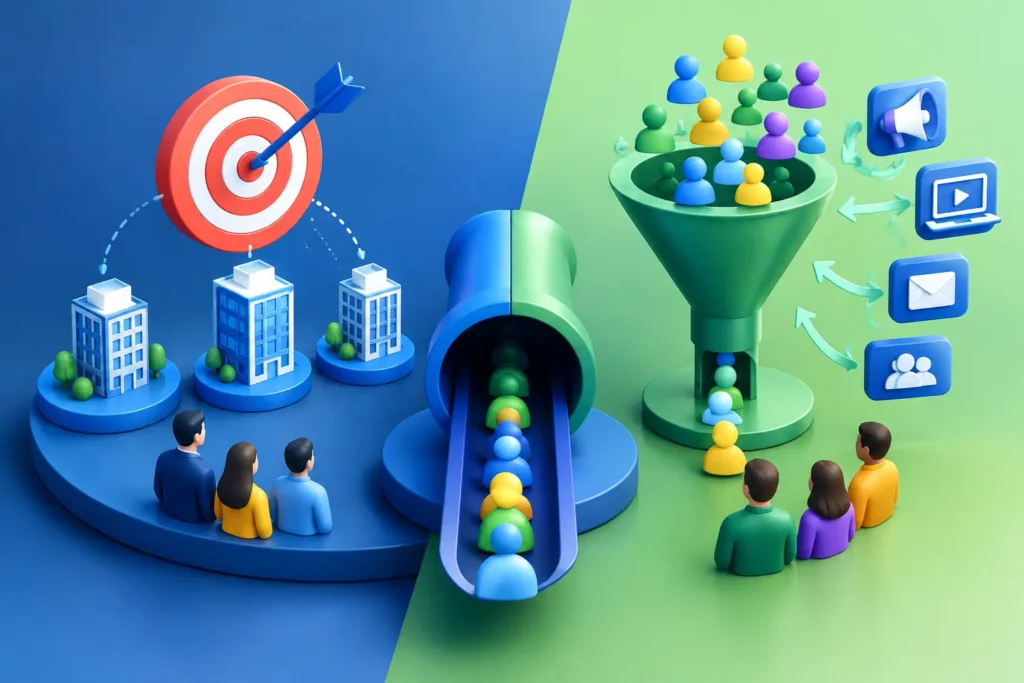
Email, LinkedIn, and cold calling should reinforce one commercial narrative. Too often, they operate as disconnected tasks: an automated email sequence, a generic connection request, and a call script that starts from zero.
That fragmentation forces the buyer to reprocess the same message repeatedly. It also prevents the outbound team from learning. A call conversation can reveal an objection that should change the next email. A LinkedIn engagement can identify a warmer path into an account. An email reply can signal that a different stakeholder owns the initiative.
A coordinated sequence does not mean contacting people everywhere at once. It means each touch has a purpose and reflects what happened before. For some personas, phone-first outreach is effective. For others, a concise email followed by a well-timed call works better. The right mix depends on the buyer, deal size, and category.
7. Follow-Up Repeats the Same Message
A follow-up that says “just checking in” gives a buyer no new reason to respond. Repeating the original pitch three times is not persistence. It is volume without progression.
Each follow-up should advance the conversation. Add a sharper observation, address a likely objection, share a different business outcome, or ask whether another role owns the problem. The objective is not to manufacture urgency. It is to make it easier for the buyer to decide whether the topic deserves attention.
Persistence still matters. Many qualified conversations begin after several touches because priorities change or the buyer simply missed the earlier message. But persistence without relevance damages both response rates and brand perception.
8. Marketing, Sales, and Qualification Are Misaligned
Sometimes buyers respond, but outreach still feels ignored because positive engagement never becomes a real opportunity. This usually points to a handoff problem.
If the outbound team books meetings with contacts who lack authority, urgency, fit, or a defined use case, closing teams will lose confidence in the channel. If account executives take too long to follow up or restart discovery from scratch, prospects will lose confidence too.
Set shared definitions for a qualified first meeting. Identify what must be known before booking, what can be learned in discovery, and what disqualifies an account. Then review outcomes together. Meeting volume without opportunity progression is not a win.
How to Find the Real Reason Buyers Are Ignoring Outreach
Do not diagnose performance from opens and sends alone. Review campaigns at the account and persona level. Look for which segments produce replies, which messages create objections, which channels create live conversations, and where meetings fail to convert.
A useful review asks direct questions. Are we reaching accounts with a plausible need? Are we speaking to the person who feels the pain or influences the decision? Does the message make a clear commercial point? Is the offer appropriate for a first interaction? Are BDRs capturing and applying what they learn?
Then run controlled tests. Change one major variable at a time: the account segment, the core problem, the proof point, the call to action, or the channel order. A complete campaign rewrite may feel decisive, but it makes learning harder. A disciplined testing process builds a repeatable outbound engine instead of a collection of isolated wins.
Build Outreach That Earns a Reply
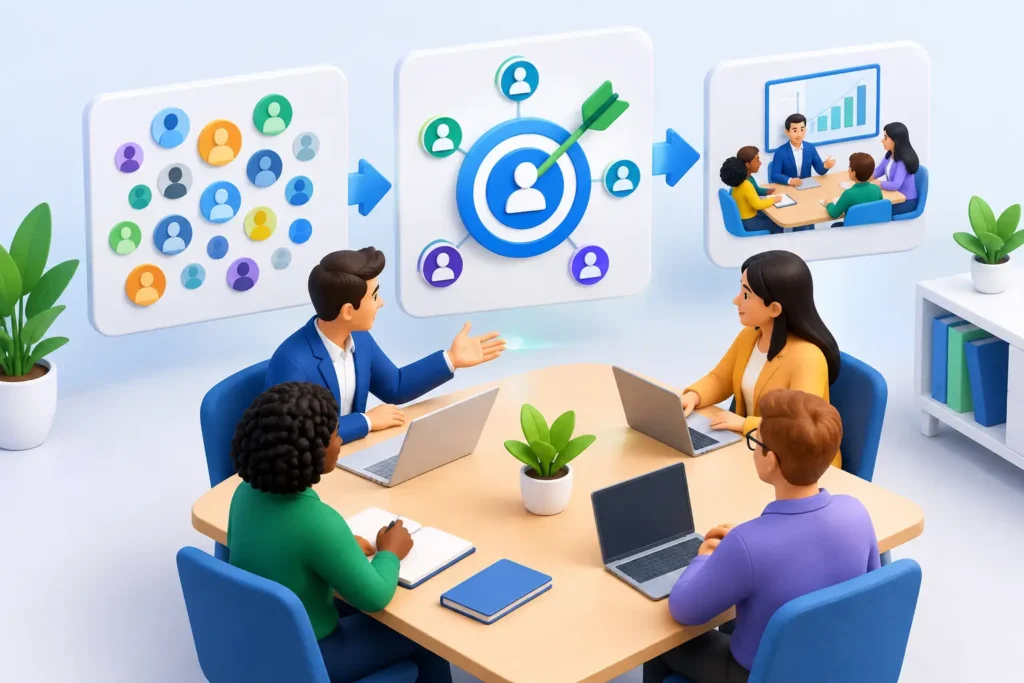
Effective outbound is an operating system, not a batch of messages. It begins with collaboration on ICP and positioning, moves into account research and personalized multichannel outreach, and continues through qualification, reporting, and iteration. Each stage should inform the next.
That is why an embedded outbound function can outperform a list vendor or a purely automated platform. Technology can accelerate research, organize workflows, and surface signals. It cannot independently judge whether an account is commercially viable, adapt a message after a live objection, or protect meeting quality. Those are human revenue decisions.
Oppify approaches outbound as shared go-to-market responsibility: build the target list carefully, put a credible message in front of the right buyers, follow up with discipline, and use results to improve the system. The goal is not maximum activity. It is qualified conversations that give your closing team a real chance to win.
When buyers ignore outreach, the answer is rarely to send more. Make the next message more relevant, more credible, and easier to act on. The buyer may still say no, but they will understand why the conversation was worth considering.