
A campaign can generate replies, meetings, and dashboard activity while still failing the business. If the accounts entering your pipeline lack urgency, budget, fit, or a credible path to purchase, your sales team inherits a qualification problem instead of a growth engine. Ideal customer profile targeting is the discipline that prevents that waste before the first email is sent or cold call is placed.
For B2B companies selling complex products and services, this is not a list-building exercise. It is a revenue decision. The accounts you target determine the objections your BDRs hear, the sales cycles your AEs inherit, the proof points your marketing needs, and the forecast your leadership team can trust.
What Ideal Customer Profile Targeting Actually Means
An ideal customer profile, or ICP, is a defined description of the companies most likely to buy, implement, retain, and expand with your product or service. It is account-level targeting. That distinction matters because a buyer persona describes the person you need to engage, while an ICP determines whether their company is worth engaging in the first place.
A CFO at a 40-person SaaS company and a CFO at a 2,000-person enterprise may share job-title pain points. Their buying process, available budget, internal stakeholders, security requirements, and timeline can be completely different. Treating both as equivalent prospects is how outbound teams fill calendars without creating pipeline.
Effective ideal customer profile targeting answers a practical question: which accounts give the sales team the best probability of reaching a qualified opportunity at an acceptable acquisition cost?
The answer is rarely just industry, company size, and geography. Those filters are a starting point. A useful ICP combines firmographic fit with commercial conditions that indicate a real reason to have a conversation now.
Start With Revenue Evidence, Not Assumptions
Founders and revenue leaders often begin with a broad market belief: “We sell to healthcare,” or “mid-market manufacturers need this.” That may be directionally correct, but it is not yet a targeting strategy.
Start by examining the customers that have created actual value. Look at closed-won deals, retained customers, fast implementations, expansions, and customers that generate credible referrals. Then look for patterns across account characteristics, buying triggers, and the path to a signed agreement.
Your best-fit accounts may share an industry, but the stronger signal might be a more specific operating condition. Perhaps they have recently raised capital, opened a new US market, hired a sales leader, adopted a complementary platform, or reached a headcount threshold that creates a process problem. These conditions are often more predictive than a generic vertical label.
This work also requires honest analysis of poor-fit wins. A large contract can look attractive in a CRM while consuming disproportionate implementation resources, extending payment terms, and producing weak retention. If those accounts are not profitable or repeatable, they should not define your ICP simply because they closed.
A disciplined review should clarify three things: who buys, why they buy now, and what makes the deal commercially healthy after the contract is signed. When the evidence is limited, particularly for early-stage companies, treat the ICP as a testable hypothesis rather than a permanent declaration.
Build an ICP Around Fit, Timing, and Reachability
A usable ICP needs enough detail to guide prospecting without becoming so narrow that the addressable market disappears. The goal is not a perfect document. The goal is a targeting system your team can operate every day.
Define the account fit
Account fit captures the qualities that make a company capable of buying and benefiting from your offer. This can include industry, revenue range, employee count, location, technology environment, business model, regulatory exposure, and organizational maturity.
For example, a cybersecurity provider may target US-based SaaS companies with 200 to 1,500 employees, enterprise customer exposure, and a growing security or compliance function. That is more actionable than targeting “technology companies,” but it still leaves room to test adjacent segments.
The right criteria depend on the sale. A high-ticket services engagement may require profitability and executive access. A product with a short implementation cycle may work well in a broader mid-market segment. Do not copy enterprise filters if your offer is designed for a fast-moving growth company.
Identify the trigger that creates urgency
Fit alone does not create meetings. A company can match every firmographic requirement and still have no reason to evaluate a solution this quarter.
Triggers turn a static account list into an outbound priority list. Common triggers include leadership changes, funding events, hiring patterns, expansion announcements, new product launches, technology changes, mergers, compliance deadlines, and visible operational strain. The relevant trigger should connect directly to the business problem you solve.
The important trade-off is scale versus precision. Trigger-based targeting usually produces smaller audiences and requires more research. In return, it gives outreach a credible reason for contact and often improves reply quality. Broad campaigns can be useful when you need market learning, but they require sharper segmentation and more careful qualification.
Confirm that the buying group is reachable
An ideal account is not useful if the people who own the problem are impossible to identify or engage through your available channels. Your targeting model should specify the economic buyer, functional owner, likely champion, and any stakeholders who can delay a deal.
This is where buyer personas support the ICP. Once an account qualifies, messaging must reflect the priorities of each role. A VP of Sales may care about pipeline coverage and rep productivity. A COO may focus on execution risk. A CEO at a growth-stage company may care about speed, capital efficiency, and whether the solution reduces operational drag.
Do not assume every stakeholder needs the same message. The account is the unit of qualification; the individual is the unit of conversation.
Turn the ICP Into an Outbound Operating Model
A slide deck does not improve pipeline. The ICP needs to appear in the workflows that govern research, outreach, qualification, reporting, and iteration.
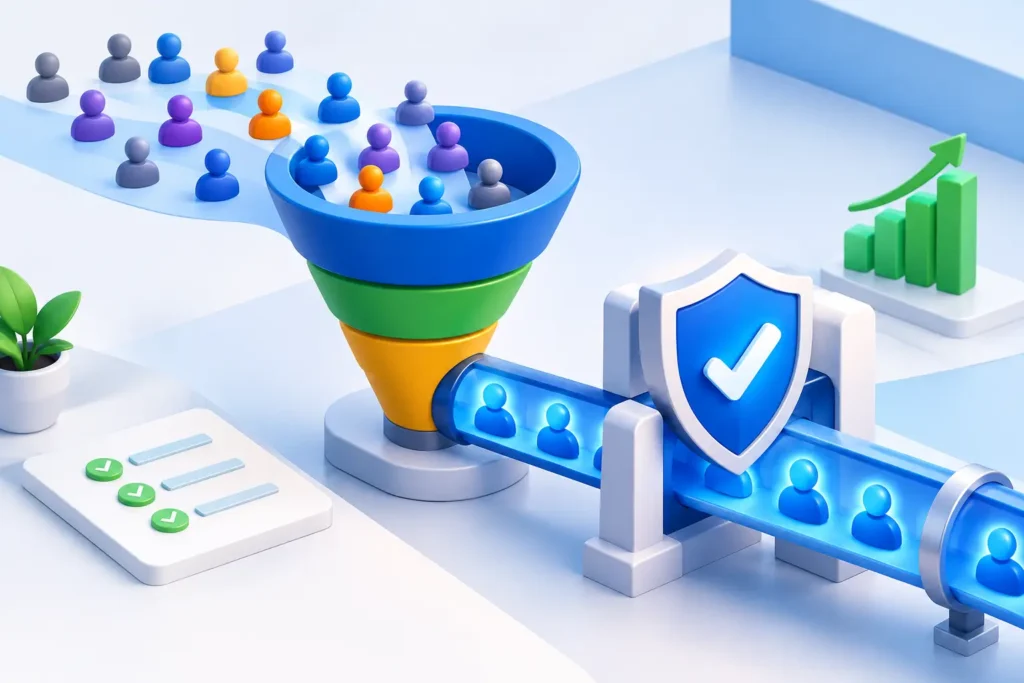
First, translate the ICP into a prioritized account universe. Tier 1 accounts should meet the strongest fit criteria and show relevant signals. They deserve deeper research, tailored messaging, and coordinated outreach across email, LinkedIn, and cold calling. Tier 2 accounts may fit the profile but lack a visible trigger, making them appropriate for more scalable but still segmented campaigns.
Second, build messaging around a specific business hypothesis. Instead of leading with a generic description of your product, connect the account’s likely condition to a measurable outcome. The message should show that you understand the operational issue without pretending to know facts you have not verified.
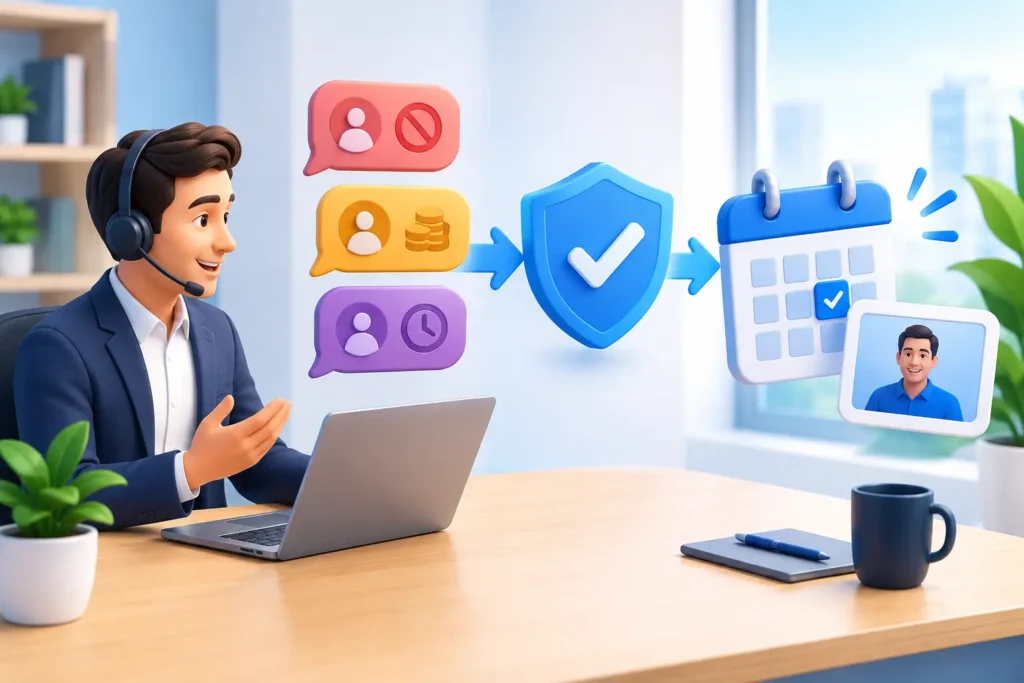
Third, establish qualification standards before meetings begin to arrive. Define what counts as a qualified first meeting: appropriate company profile, relevant stakeholder, active or credible problem, potential timeline, and a reason to continue the sales process. A meeting with a senior title is not automatically a sales opportunity.
Finally, report on the full path from targeted account to revenue. Open rates and reply rates can diagnose campaign performance, but they are not the business outcome. Track positive conversations, qualified meetings held, opportunities created, stage progression, win rate, sales cycle length, and revenue by segment. That feedback determines whether your ICP is producing pipeline or merely activity.
Common Failure Points in ICP Targeting
The most common failure is defining the ICP too broadly to protect volume. A market of millions of possible companies may look promising, but an outbound team cannot write meaningful messages, qualify efficiently, or learn quickly from a category that vague.
The opposite mistake is overfitting the profile to a handful of customers. If every criterion is mandatory, you can exclude viable accounts and leave your BDR team with too little territory. Separate hard disqualifiers from useful signals. For instance, lack of US operations may be a disqualifier for a US-focused service, while a specific technology integration may be a prioritization signal rather than a requirement.
Another failure is letting prospect research and qualification drift apart. If the research team targets companies based on one definition of fit while sales accepts meetings based on another, reporting becomes unreliable and friction follows. Revenue leaders should agree on the operating definition, then revisit it based on conversion data rather than anecdotal preferences.
Treat the ICP as a Living Revenue Asset
Your ICP should change when the evidence changes. A new product tier, improved onboarding, a stronger customer case study, or a shift in market conditions can create an attractive segment that was previously out of reach. The reverse is also true: an audience that generated early traction may become less efficient as competition increases or buying priorities shift.
That does not mean rebuilding targeting every month. It means running structured tests with clear segment boundaries, measuring downstream quality, and retaining what produces revenue. An embedded outbound team can make this process faster because prospecting, messaging, BDR conversations, and sales feedback operate in one accountable loop.
The strongest targeting programs do not chase the largest possible list. They create a repeatable way to find accounts where a relevant conversation can become a commercially sound customer. When your team knows who to pursue, why now, and what qualified means, every outbound action has a better chance of earning its place in the pipeline.