
A SaaS pipeline problem rarely starts with a lack of activity. It starts when activity is disconnected from the accounts most likely to buy, the people able to influence the deal, and a follow-up process that survives longer than one rep’s calendar. To build an outbound pipeline, SaaS companies need a repeatable operating system, not a larger list or another sequence.
For early-stage and growth-stage teams, the pressure is clear. Founders and revenue leaders need qualified first meetings now, but hiring, onboarding, managing, and tooling an internal BDR function can consume capital for months before it produces reliable results. The answer is not indiscriminate volume. It is disciplined execution across targeting, messaging, outreach, qualification, and reporting.
Start With the Revenue Motion, Not the Contact List
Outbound works when it supports a defined go-to-market decision. Before sourcing accounts, establish what the team is trying to prove: a new vertical, a new buyer persona, an enterprise expansion motion, or a geographic market. Each requires different account criteria, messaging, qualification standards, and sales follow-up.
A cybersecurity SaaS company selling into mid-market healthcare organizations should not use the same playbook as a workflow platform pursuing venture-backed technology companies. The first may require a compliance-led message, multiple stakeholders, and a longer procurement path. The second may win attention through a sharper operational pain point and a faster time-to-value narrative.
Define the ideal customer profile with enough precision to make exclusion decisions. Revenue teams should be able to explain why an account belongs in the campaign based on firmographics, technology environment, growth signals, business model, likely pain, and buying potential. If the answer is simply that the company has more than 100 employees, the targeting is not ready.
The same discipline applies to personas. A title is not a buying role. A VP of Operations, CIO, and Director of Revenue Operations may all appear on an account list, but each faces a different problem and carries different influence. Build messages around their operational reality rather than forcing one generic pitch across the committee.
Build Outbound Pipeline SaaS Teams Can Measure
Pipeline creation becomes predictable when every stage has an owner and a measurable definition. A booked meeting is not automatically a qualified opportunity. A positive reply is not intent. Without clear stage rules, outbound reporting can look healthy while sales teams receive meetings that never had a path to revenue.
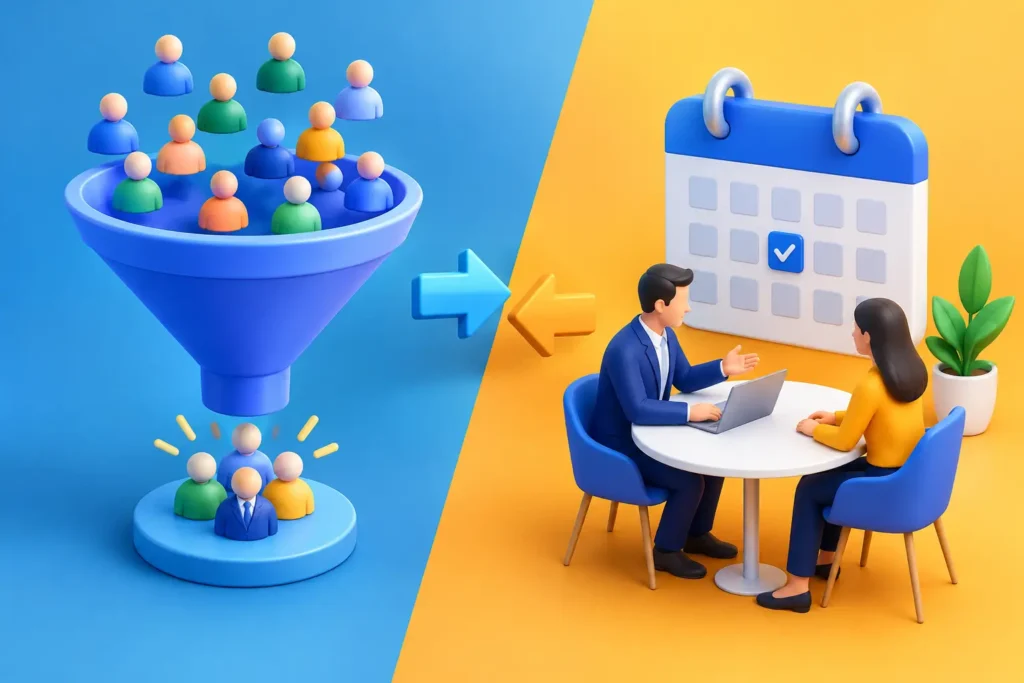
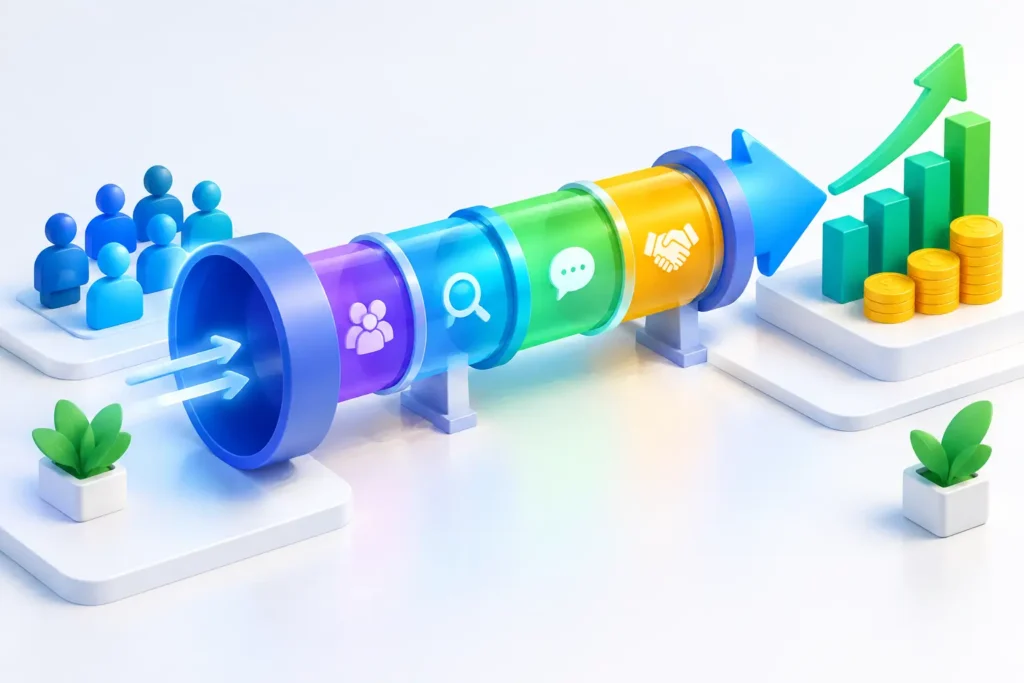
Start with a practical funnel: target accounts, validated contacts, engaged prospects, qualified conversations, booked first meetings, sales-accepted opportunities, and pipeline created. Review conversion rates between each stage weekly. A low reply rate may signal poor positioning or deliverability. Strong replies with weak meeting rates may point to an unclear call to action. High meeting volume with low sales acceptance usually means qualification criteria need to be tightened.
The goal is not to optimize one vanity metric. It is to identify where the revenue motion is breaking and correct it quickly. That requires shared definitions between outbound and closing teams. Sales should know what information has been confirmed before a meeting reaches the calendar, while the outbound team needs direct feedback on meeting quality, deal progression, and common objections.
A useful qualification standard typically covers the prospect’s business problem, current approach, relevant initiative or trigger, stakeholder role, potential fit, and a credible reason to meet. It does not require forcing a full discovery call into a cold outreach exchange. It does require enough context to protect account executive time.
Use Multichannel Outreach With a Clear Reason to Respond
Cold email alone can create opportunities, but it is more effective when paired with relevant LinkedIn engagement, thoughtful calling, and coordinated follow-up. Multichannel does not mean repeating the same generic message in four places. It means using each channel for what it does best.
Email provides room for a concise point of view and a specific business hypothesis. LinkedIn can establish familiarity, validate a prospect’s priorities, and provide context before or after an email. Cold calls create fast feedback when a message is resonating and can reach buyers who rarely respond in writing. Follow-up turns initial awareness into a real conversation.
Personalization should be earned, not manufactured. Mentioning a prospect’s college or a random social post is not a business case. High-value personalization connects a real account signal to a credible reason your SaaS solution matters. That signal might be a recent expansion, a change in leadership, a product launch, a new compliance requirement, a technology investment, or visible hiring in a function tied to the problem you solve.
The message itself should stay simple. Lead with the problem or opportunity, explain why it may be relevant now, and ask for a low-friction next step. Do not bury the value proposition under feature descriptions. Executives do not need a product tour in their inbox. They need a reason to believe a conversation could help them make a better commercial or operational decision.
Protect Deliverability and Data Quality
The most sophisticated campaign will fail if emails do not arrive, records are inaccurate, or prospects receive duplicate outreach from multiple people. Outbound infrastructure is part of the sales motion, not an administrative detail.
Maintain clean sending domains, appropriate inbox volume, verified contact data, suppression rules, and CRM hygiene. Keep account ownership visible so BDRs, account executives, founders, and partners do not collide in the same accounts. Document opt-outs and channel preferences immediately.
Data quality also affects the credibility of personalization. If a campaign references an executive who left six months ago or pitches an offering the company does not provide, the team loses trust before the conversation begins. AI can accelerate research, list enrichment, classification, and workflow management. Human review is still required to confirm relevance, sharpen the message, and recognize the exceptions that automation misses.
Treat Follow-Up as a Revenue Discipline
Most qualified prospects will not respond to the first message. They may be busy, skeptical, in the wrong moment, or simply unable to prioritize an unfamiliar vendor. A disciplined follow-up process gives a sound business case more than one chance to land.
Each follow-up should introduce a new angle rather than restating the initial ask. Share a different business consequence, a relevant trigger, a role-specific observation, or a concise question that makes replying easy. If there is no new reason to continue, stop. Persistence without relevance damages the brand and wastes capacity.
The handoff after a meeting is equally important. The account executive should receive campaign context, the stated pain point, known stakeholders, qualification notes, and the reason the prospect agreed to talk. Then the outbound team needs feedback after the meeting. Was the account in profile? Was the problem real? Was the timing credible? Did sales create an opportunity? This loop is how targeting and qualification improve rather than reset every quarter.
Decide What to Build Internally and What to Operate With a Partner
An internal BDR team can make sense when a company has a proven ICP, experienced sales leadership, enough volume to support dedicated management, and the time to recruit and ramp talent. It also requires investment in data, enablement, call coaching, campaign operations, and performance management. The salary cost is only part of the equation.
For companies testing a market, entering a new segment, or needing pipeline without adding management overhead, an embedded outbound function can be the faster option. The strongest model is not a detached vendor delivering a spreadsheet of leads. It is a team that operates alongside sales leadership, owns the daily work, reports transparently, and is accountable for qualified meetings that have a real chance to become revenue.
Oppify applies that model through GTM leadership, sales enablement, prospecting infrastructure, and US-based BDR execution, so clients can focus their internal sales capacity on discovery, proposals, and closing.
The right operating choice depends on maturity. What should not change is the standard: outbound must be tied to a defined market, managed through visible metrics, and improved through direct feedback from the people closing deals.
A healthy outbound engine earns its budget when sales can look at next quarter’s calendar and see not just more meetings, but the right conversations with accounts worth winning.