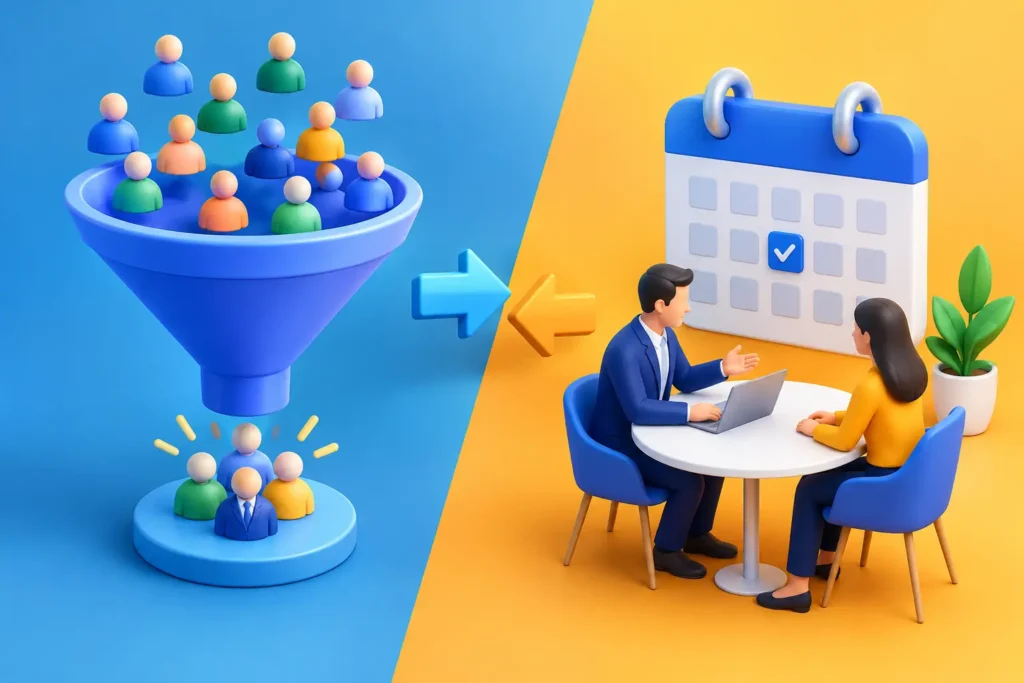


A no-show is not just an empty slot on an AE’s calendar. It is paid acquisition effort, BDR time, research, follow-up, and pipeline capacity that produced no sales conversation. Learning how to reduce demo no-shows starts with treating attendance as part of qualification, not an administrative detail after the meeting is booked.
For B2B teams selling complex software or specialized services, the problem is rarely solved by adding another reminder email. Prospects miss demos when the meeting carries little urgency, the right stakeholders are absent, the expected value is unclear, or the calendar invite never became a real commitment. Fixing the problem requires better controls across the full meeting-generation process.
Why qualified demos still become no-shows
A prospect can fit your ICP, hold the right title, and reply positively to outreach yet still fail to attend. Interest is not intent. In outbound sales, many meetings are booked during a busy moment between calls, while traveling, or before the prospect has considered whether the problem deserves time on their calendar.
The most common operational mistake is counting a booked meeting as a completed handoff. A meeting booked from a cold campaign needs a second layer of work: confirmation, context, stakeholder alignment, and value reinforcement. Without it, the meeting is merely a tentative reservation.
No-show rates also rise when qualification is overly focused on company fit. Firmographic fit matters, but it does not answer the questions that protect attendance: Does this person own the problem? Is there an active priority behind it? Can they evaluate a solution? Are other decision-makers needed? A meeting with a strong account but weak urgency is still vulnerable.
How to reduce demo no-shows before the calendar invite
The highest-leverage fixes happen before the prospect selects a time. Your BDRs should make the meeting feel specific enough that declining or missing it creates a small but meaningful cost for the buyer. Generic language such as a quick intro or a 15-minute chat lowers that cost. It gives the prospect no clear reason to prepare, attend, or bring a colleague.
Anchor the meeting to a stated business outcome. If the prospect responded because they are hiring sales reps, entering a new market, or struggling to create qualified pipeline, reflect that issue in the booking conversation. The demo should be positioned as a working discussion about that specific motion, not a broad product tour.
A practical booking exchange establishes three things: why now, what will be covered, and who should attend. That does not require turning a short cold-call conversation into a discovery call. It means asking one direct question before booking, such as whether the prospect is personally evaluating solutions or whether a revenue leader, operations partner, or technical stakeholder should join.
This is where teams need judgment. Requiring too much qualification before scheduling can reduce total meeting volume and slow speed-to-calendar. For lower-cost products or high-velocity motions, a lighter process may be appropriate. For enterprise, multi-stakeholder, or high-ACV sales, accepting every positive reply creates a calendar full of weak opportunities. Set the threshold based on deal economics, sales cycle length, and AE capacity.
Turn the invite into a mutual commitment
A calendar event should do more than hold time. It should tell the prospect why the meeting exists, what they will get from it, and what happens next if the conversation is useful.
Immediately after a meeting is booked, send a concise confirmation from the person who will run the call. Reference the prospect’s stated priority, name the agenda, and confirm the time zone. For example, the message can say the team will review their current outbound coverage, identify gaps in targeting or execution, and determine whether a managed BDR function is relevant. Specificity makes the invite harder to ignore.
The event description should also be clean. Include the attendee names, meeting link, duration, and a short agenda. Do not overload it with a marketing brochure or a generic company overview. The goal is to reduce friction and reinforce relevance in the few seconds a prospect spends scanning their calendar.
For strategic opportunities, ask a simple confirmation question 24 to 48 hours before the meeting. A reply creates a new commitment and surfaces conflicts early. If the buyer cannot attend but offers another time, that is not a no-show problem. It is a recoverable reschedule.
Build a reminder sequence that earns attention
Reminders work when each one adds a reason to attend. Repeating the same calendar notification three times can feel automated and easily disappears into a crowded inbox. The right cadence depends on your audience, but most B2B teams benefit from a confirmation immediately after booking, a value-based reminder one business day before, and a short final check-in on the meeting day.
Use different channels when appropriate. Email is the baseline because it preserves context. LinkedIn can be useful for prospects who engaged there during the outreach sequence. A brief call or voicemail is often justified for higher-value meetings, especially when the BDR has already spoken with the prospect. The objective is not to chase every attendee aggressively. It is to make it easy for serious buyers to confirm or reschedule.
The message should acknowledge their time. Instead of asking whether they are still good for the demo, tie the reminder to the outcome: the team has prepared the discussion around the market segment, hiring plan, workflow issue, or initiative they mentioned. This signals that the meeting will not be a generic pitch.
Avoid over-automating this stage. Automation can trigger reminders reliably, but a human should own exceptions. When a prospect’s company announces funding, changes leadership, enters a new market, or responds with a new concern, the follow-up needs to reflect that context. AI workflows can organize signals and tasks. They cannot replace accountable judgment about whether a meeting is worth saving.
What to do when a prospect misses the demo
Do not let a no-show sit untouched until the next campaign cycle. The first 15 minutes matter. Send a short, professional note that assumes a scheduling conflict rather than bad intent. Restate the outcome the prospect wanted to discuss and offer two concrete times to reconnect.
If there is no response, follow with a phone call or voicemail for high-value accounts, then continue with a short reschedule sequence over the next week. Keep the tone direct. A prospect who misses once may still be a viable opportunity. A prospect who ignores every confirmation, reschedule request, and follow-up signal should return to nurture rather than consume AE time.
Sales teams should distinguish between no-shows that were never qualified and qualified buyers whose priorities changed. The first category points to a targeting, messaging, or booking problem. The second may be timing. Blending them into one no-show metric hides the real issue and encourages the wrong fix.
Measure the stages, not just the no-show rate
A single attendance percentage is useful, but it is not diagnostic. Track meeting source, booking channel, days between booking and meeting, confirmation rate, stakeholder attendance, reschedule rate, and no-show rate by segment. Review the data by BDR, campaign, persona, and account tier.
If one campaign produces a high booking rate but poor attendance, the offer may be attracting curiosity rather than buying intent. If attendance falls when meetings are scheduled more than seven days out, protect calendars with tighter availability or a stronger confirmation process. If a specific persona regularly fails to attend, revisit whether that role has enough ownership to justify the meeting.
The same discipline should carry into reporting. A meeting-generation partner or internal outbound team should show booked meetings, held meetings, qualified opportunities, and the reasons opportunities did not advance. That visibility turns no-shows from a frustrating anecdote into a controllable funnel metric.
The goal is not to force every prospect onto a call. It is to create a calendar where the people who accept meetings understand why they are attending, arrive prepared to discuss a real priority, and give your sales team a fair chance to earn the next step.