
A B2B outbound sales agency should not be hired because your team wants more names in a spreadsheet. It should be hired when revenue leadership needs a repeatable way to start qualified conversations with accounts that are difficult to reach, slow to buy, or poorly served by generic demand generation.
For companies selling complex software, specialized services, or enterprise solutions, pipeline creation is rarely a volume problem alone. It is a targeting, positioning, timing, and follow-up problem. A poorly run outbound program can create activity without opportunity. A disciplined program gives your closing team a steady flow of meetings with people who fit the account, role, need, and buying context you actually want.
What a B2B Outbound Sales Agency Should Own
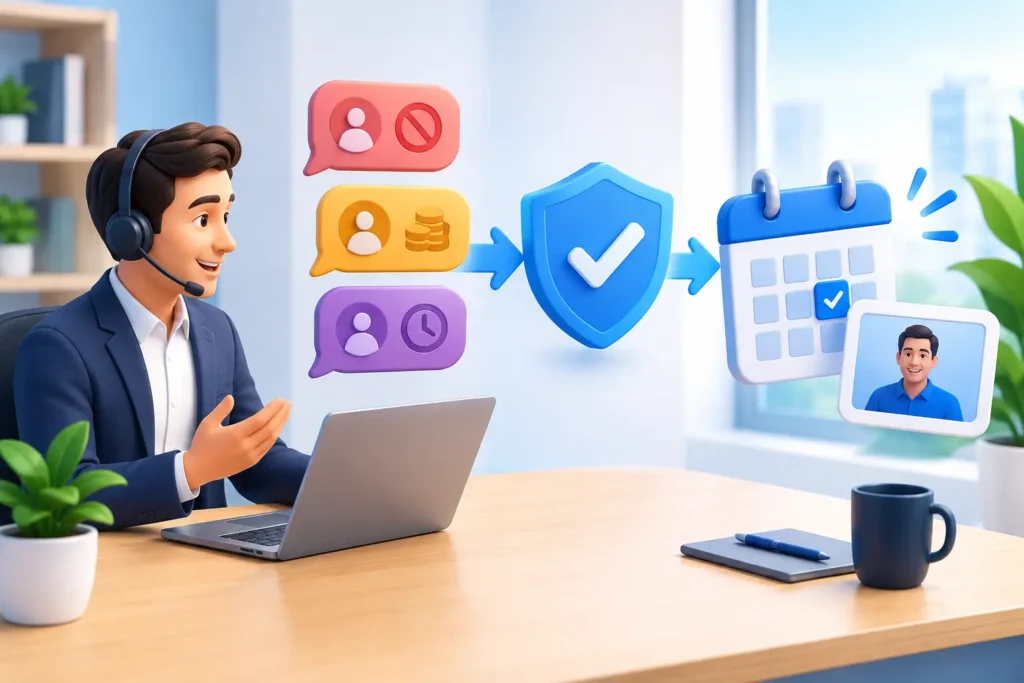
A capable outbound partner does more than send cold emails. It operates the front end of your go-to-market motion: translating commercial objectives into a defined ideal customer profile, identifying the right accounts and stakeholders, building relevant messaging, running multichannel outreach, qualifying responses, and putting viable first meetings on your calendar.
That requires both infrastructure and judgment. AI-assisted research, data enrichment, workflow automation, and sequencing tools can make a team faster. They cannot decide whether a target account is strategically relevant, whether a message reflects the buyer’s actual priorities, or whether an interested response warrants a meeting. Those decisions still need experienced people who understand sales qualification and can protect your account executives’ time.
The difference matters. A lead-generation vendor may promise a set number of contacts or meetings. An embedded outbound function takes responsibility for the work that produces pipeline: account selection, persona mapping, messaging, execution, follow-up, and reporting. It should operate as an extension of your revenue team, with clear expectations on both sides.
The Signs You Need External Outbound Execution
The most common trigger is a gap between growth targets and internal capacity. Your founders or account executives may be doing prospecting between discovery calls, customer meetings, and deal reviews. That can work briefly, especially when the market is narrow and leadership has strong personal networks. It rarely remains reliable as the company expands into a new vertical, geography, or buyer segment.
Another signal is inconsistency. The team starts outbound with energy, books a few meetings, then stops when closing work becomes urgent. Lists become outdated, sequences are not tested, follow-ups are delayed, and no one owns the operating rhythm. The result is a pipeline channel that exists only when someone has spare time.
External execution also makes sense when hiring internally would create too much cost and risk. A productive outbound program needs more than one junior rep. It needs strategic direction, sales enablement, data and systems support, campaign development, management, and BDR execution. Building that capability means recruiting, onboarding, purchasing technology, creating playbooks, and waiting through ramp time. For a lean growth-stage company, that can be a significant commitment before the motion has been proven.
Outsourcing is not automatically the answer. If your offer is still changing every month, your ICP is undefined, or your sales team cannot consistently run a strong discovery call, an agency cannot solve the underlying problem. It can help sharpen those inputs, but outbound performs best when there is a credible value proposition, a reachable market, and a sales owner ready to close.
How a Meeting-Generation Engine Works
The work should begin with collaboration, not a campaign launch. Revenue leaders need to align on target segments, account criteria, buyer roles, commercial triggers, qualification standards, and the difference between a conversation worth having and a meeting worth booking. This is where the agency learns the language of your customers and the realities of your sales cycle.
Next comes prospecting. The goal is not to assemble the biggest possible list. It is to create a defensible account universe, prioritize companies with a reason to engage, and identify the people who influence the buying process. For enterprise or mid-market sales, that may include an economic buyer, an operational champion, a technical evaluator, and a procurement stakeholder. A single contact per account is often not enough.
Outreach should be personalized at the account and persona level without becoming impossible to scale. That means campaigns based on real hypotheses: a specific market problem, a common operational friction, a technology change, a growth event, or a strategic initiative. Cold email, LinkedIn, and phone outreach each play different roles. Email creates a concise reason to respond. LinkedIn adds familiarity and context. Calling can surface information quickly, especially when the message is relevant and the BDR knows why the account was selected.
When replies arrive, speed and judgment matter. Positive interest should be handled quickly. Soft objections should be explored rather than discarded. A prospect who says “not now” may still reveal a future initiative, a better contact, or a buying condition worth tracking. Rigorous follow-up is where much of outbound value is created, because many qualified buyers are busy rather than uninterested.
A practical operating model is simple: collaborate on the market, prospect the right accounts, execute outreach, qualify opportunities, report on what is happening, and repeat with better inputs. The repetition is essential. Outbound is an operating system, not a one-time campaign.
Measure Quality Before You Celebrate Volume
Meeting count is visible, so it often becomes the headline metric. It should not be the only one. Ten meetings with companies outside your ICP can cost more than they create. The correct scorecard follows the path from activity to revenue.
Start with account quality. Are target companies the right size, industry, maturity, and technical or commercial fit? Then evaluate persona quality. Are conversations happening with people who can sponsor, evaluate, or influence a purchase? From there, examine meeting-held rate, sales-accepted opportunities, pipeline created, and progression into later stages.
You should also look at channel-level signals. Reply rates may indicate whether messaging is landing, but they do not prove commercial value. Call connection rates can inform dialing strategy, but they do not prove qualification. The question is whether the outreach is creating credible sales conversations with the accounts your team wants to win.
Transparency is non-negotiable. Your partner should provide clear visibility into account lists, messaging, activity, replies, booked meetings, objections, and campaign performance. When results are weak, leadership needs to know whether the issue is targeting, positioning, deliverability, cadence, qualification, or close-stage conversion. Vague reporting makes improvement impossible.
Questions to Ask Before Choosing a Partner
Ask who will actually do the work. Some agencies sell senior strategy but hand execution to anonymous, overloaded contractors. Others rely heavily on automation and treat personalization as a token first line. For complex B2B sales, you need accountable operators who can research accounts, speak credibly with US buyers, and represent your company well in direct conversations.
Ask how the team handles qualification. A calendar filled with unprepared prospects is not a win. Define what qualifies as a first meeting, what information must be captured before booking, how no-shows are managed, and when a lead should be nurtured rather than passed to sales.
Ask how quickly the program can learn. The first messaging angle may not be the strongest. A strong partner tests deliberately, documents objections, identifies patterns by segment, and adjusts based on evidence. That is different from changing copy every few days without a clear hypothesis.
Finally, ask whether the commercial model encourages the right behavior. Paying only for booked meetings can create pressure to lower qualification standards. A monthly engagement without performance visibility can create the opposite problem: activity with little urgency. The best arrangement combines defined operating responsibilities, transparent reporting, shared qualification criteria, and regular decision-making with your revenue leadership.
Oppify is built around this embedded model: a managed outbound team that combines go-to-market engineering, sales enablement, business-development leadership, and US-based BDR execution so internal sellers can focus on advancing and closing real opportunities.
The right outbound partner will not promise that every target account will buy. No credible team can. It will give your company a disciplined way to enter the accounts that matter, learn from the market quickly, and turn that learning into better conversations week after week. If your closers are ready to sell but pipeline creation lacks ownership, that is the moment to build the engine.