
A VP of Sales does not need more LinkedIn activity. They need conversations with accounts that can buy, contacts who can influence the decision, and a follow-up process that does not let real intent disappear after one message. That is the standard LinkedIn outreach services B2B companies should hold themselves to.
For complex B2B sales, LinkedIn is rarely a standalone meeting-generation channel. It is a high-value surface for research, credibility, warm context, and direct access to senior buyers. Used well, it strengthens email and calling efforts. Used poorly, it produces generic connection requests, damaged brand perception, and a dashboard full of vanity metrics.
The difference is not the automation tool. It is the operating system behind the outreach: a defined ICP, credible messaging, account-level coordination, human judgment, and ownership of qualified meetings.
What LinkedIn outreach should actually produce
A connection acceptance is not pipeline. Neither is a reply that says, “Send me more information.” Those signals can be useful, but they are not the outcome a growth leader should buy.
The job of LinkedIn outreach is to create relevant sales conversations with people who match the account criteria, have a plausible business problem, and can participate in a real buying process. Depending on the motion, that may mean booking a first meeting with a functional leader, opening a multithreaded conversation across a target account, or identifying the executive sponsor before a formal procurement cycle begins.
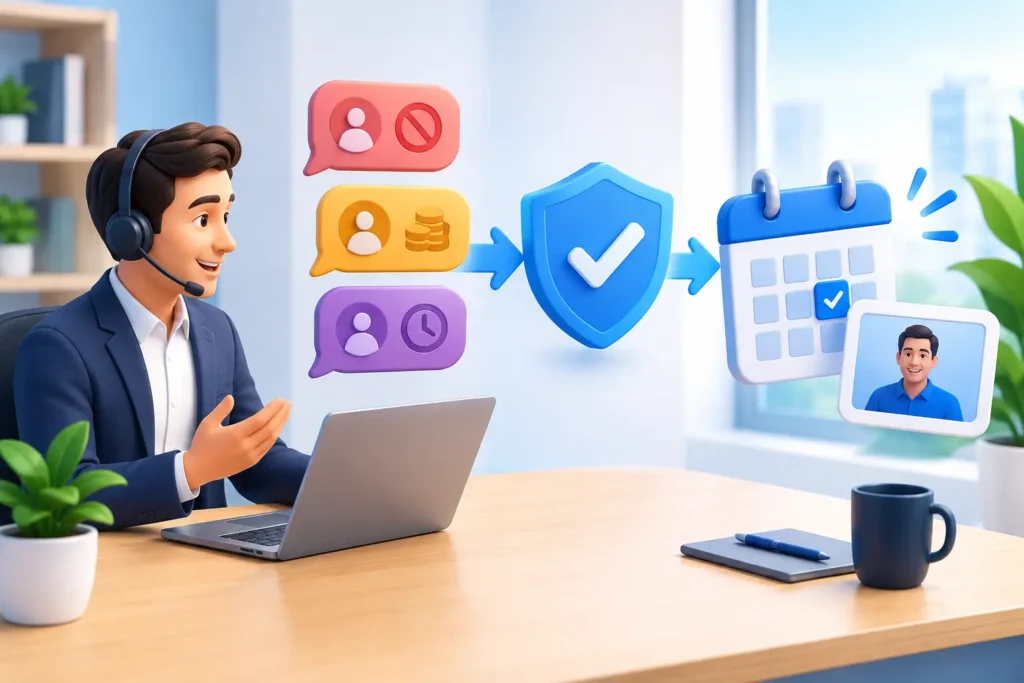
This requires a clear definition of a qualified meeting. The definition should reflect more than job title. A qualified opportunity may require a target company size, a current technology environment, evidence of a strategic initiative, a defined geography, a budget range, or a near-term trigger. If the criteria are vague, the outreach team will optimize for calendar volume while the sales team rejects meetings.
That disconnect is expensive. It wastes BDR capacity, creates friction between marketing and sales, and makes it harder to know whether the channel is working. A disciplined program starts by agreeing on what deserves a seller’s time.
Why LinkedIn outreach services B2B programs fail
Most failed programs do not fail because LinkedIn is ineffective. They fail because the activity is disconnected from the wider go-to-market motion.
The first issue is weak targeting. A list filtered by industry, headcount, and title may look precise, but it can still contain companies with no reason to change. The right account list combines firmographic fit with commercial context: growth events, hiring patterns, leadership changes, product signals, expansion plans, customer profile, and likely operational pain.
The second issue is generic personalization. Mentioning a prospect’s recent post or inserting their company name into a template is not enough. Senior buyers see through it immediately. Meaningful personalization connects a credible observation about the account to a specific business consequence and a reason the sender is qualified to start the conversation.
The third issue is treating the platform as an email substitute. LinkedIn messages are shorter, more personal, and more visible than cold emails. They work best when they make one relevant point and invite a low-friction response. A long pitch deck in message form creates work for the prospect before value has been established.
Finally, many teams stop too early. A buyer may view a profile, accept a connection, ignore an initial note, then reply after a thoughtful email or a call that references the same business issue. Channel coordination is not optional in enterprise and mid-market selling. It is how a company becomes recognizable without becoming repetitive.
Build the program around accounts, not message volume
A reliable outreach engine begins with a target-account strategy. Before sending messages, define which segments matter most, why they matter now, and what each segment is likely to care about.
For a SaaS company selling into operations leaders, the priority might be organizations expanding into new regions while managing fragmented workflows. For a specialized service provider, it may be companies facing compliance deadlines, M&A integration, or a rising cost of internal delivery. The trigger changes the message, the contact map, and the timing of the outreach.
Research the buying committee
LinkedIn is especially useful for mapping the people around a buying decision. The first person who responds may not be the economic buyer, and that is fine if the outreach process knows what to do next.
A strong program identifies likely champions, functional owners, executive sponsors, technical evaluators, and procurement stakeholders. It also recognizes when a target account is too early, too small, locked into a long contract, or simply not a fit. Disqualifying quickly protects the team’s time and keeps reporting honest.
For complex deals, start with a focused group of accounts rather than trying to reach every possible prospect at once. Depth creates better insight. Once the team sees which titles, triggers, and value propositions generate productive conversations, it can expand with confidence.
Create messages that earn a response
Effective LinkedIn outreach does not need to be clever. It needs to be specific.
A good first touch often names a relevant business condition, frames a potential consequence, and offers a concise reason to talk. It does not assume the prospect has a problem. It does not claim a dramatic result without context. And it does not ask for 30 minutes before establishing why the conversation matters.
Consider the difference between “We help companies like yours grow revenue with AI” and a message that references a company’s push into a new customer segment, then asks whether the team has already built the outbound capacity required to support it. The second message gives the buyer a reason to evaluate the relevance of the conversation.
The wording should vary by persona. A CEO may care about speed to market and capital efficiency. A CRO may care about pipeline coverage, sales capacity, and conversion quality. A director leading a specific function may care about workload, risk, and execution gaps. One message cannot credibly speak to all three.
Connect LinkedIn to email, calling, and follow-up
LinkedIn produces better results when it is part of a coordinated sequence. A prospect might receive a relevant email, see a connection request from the person who sent it, receive a concise LinkedIn follow-up, and later get a targeted call. Each touch should add context instead of repeating the same pitch.
This is where workflow engineering matters. The team needs clean account data, contact-level activity history, appropriate sending limits, task routing, reply classification, and a clear handoff process when intent appears. Automation can reduce administrative work, but it cannot determine whether a prospect’s response signals curiosity, objection, referral, or genuine buying interest. Human review remains essential.
Timing also depends on the sales cycle. A transactional offer may justify a shorter sequence and a direct call to action. A larger enterprise sale often benefits from patient, insight-led outreach over several weeks, followed by periodic re-engagement when a new trigger appears. More touches are not automatically better. Relevance and persistence must stay in balance.
Measure quality before scale
The easiest LinkedIn metrics to report are connection requests sent, acceptance rate, profile views, and replies. They are useful diagnostics, but they do not answer the commercial question: Is the program creating qualified pipeline?
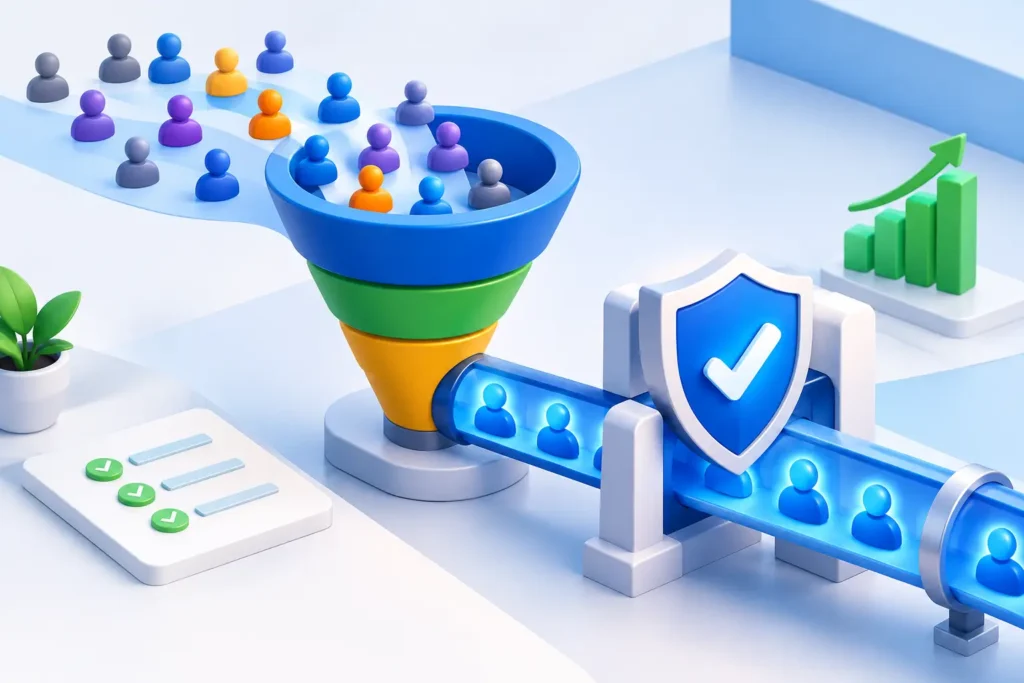
Track the path from target accounts to positive conversations, qualified meetings, sales-accepted opportunities, pipeline value, and closed revenue. Review outcomes by segment, persona, campaign angle, and source channel. If meetings are booking but not progressing, inspect the qualification standard and message-to-meeting handoff. If response rates are low, inspect targeting and relevance before increasing volume.
Reporting should also expose the work behind the numbers. Leadership should be able to see the accounts being pursued, the market signals informing campaigns, response themes, objections, meeting outcomes, and next experiments. This turns outbound from a black box into a managed revenue function.
At Oppify, that discipline is built around a practical operating rhythm: collaborate on the market strategy, prospect the right accounts, execute outreach across channels, convert engagement into opportunities, report on what is working, and repeat with better data. The goal is not to outsource responsibility. It is to add an accountable outbound team that operates like part of the client’s go-to-market organization.
When a managed service makes sense
A managed LinkedIn outreach service is most useful when a company has a credible offer and sales capacity, but lacks the time, systems, or experienced BDR coverage to build outbound internally. It can also make sense during a new market launch, after a funding event, or when leadership needs to test a segment before committing to permanent hires.
It is not a substitute for product-market fit, a clear value proposition, or a sales team that follows up promptly. No agency can manufacture demand from an offer that buyers do not understand or a process that cannot close. The best engagement is a partnership with shared accountability: the outbound team owns research, execution, qualification, and reporting; the client brings market expertise, fast feedback, and strong closing discipline.
Before selecting a provider, ask how it defines a qualified meeting, who writes and approves messaging, whether outreach is truly personalized at the account level, how it handles reply follow-up, and what happens when early campaign assumptions prove wrong. The answers reveal whether you are buying a list-and-sequence vendor or a real extension of your revenue team.
The practical test is simple: every LinkedIn message should make a target buyer feel that the sender understands something material about their business. Build from that standard, measure the meetings that advance, and let the market response sharpen the next round of outreach.